

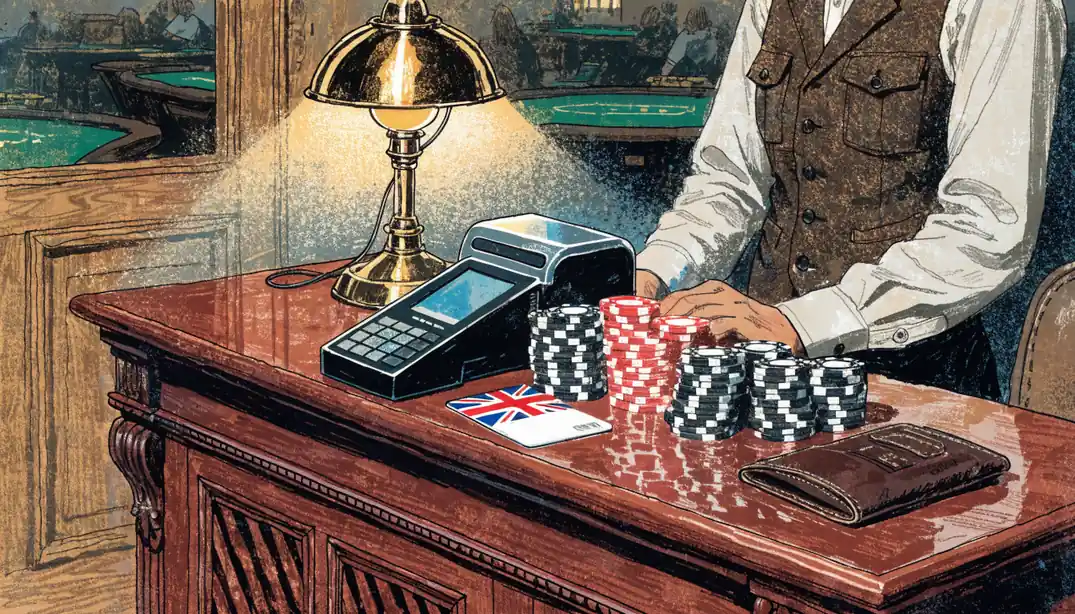
A casino’s cashier shows account-specific deposit options, while alternative methods and withdrawal routes need separate verification.
Is Giropay still a realistic option for UK casino deposits?
Giropay may appear in searches for British casino payment methods, but you should treat it as a method to verify rather than an option you can assume will be available. A page carrying the words “Giropay casino” does not, by itself, tell you that Giropay can be selected by a UK customer, that it is enabled for new accounts, or that it will appear after registration.
The practical answer is found in the casino cashier. That is where the operator shows the payment methods available for your account, location and chosen currency. If Giropay is not displayed there, a general payment page, an old review or a search result cannot turn it into an active deposit route.
That is the awkward part of looking for casinos that accept Giropay in the UK. People often want an all-in-one list, perhaps with a bonus, games and a mobile option attached. Payment menus do not stay fixed in that tidy way. A method can be mentioned on a casino page and still be unavailable when you log in. The reverse can also happen: a cashier may show a route that is not prominent elsewhere on the site.
Casinos That Accept Click2Pay in the UK: What to Check
I would therefore avoid treating labels such as “best Giropay casino” or “new Giropay casino” as proof of current compatibility. They describe a marketing or review category, not a transaction that has been tested on your account. The same caution applies if you are looking specifically for an Android casino using Giropay. Android access and payment availability are separate questions. A casino may load on a phone while offering a different cashier from the one you expected, or it may show the same payment menu only after age and account checks.
What you can actually establish
Start with a remote gambling licensee that serves the British market, then open its registration and cashier pages. Remote gambling operators selling into Great Britain must hold the relevant Gambling Commission licence, and the licence number can be checked on the UK Gambling Commission public register before you deposit. That check tells you something important about the operator. It does not, however, confirm that Giropay is available. The payment method still needs its own check.
Casino Payments: UK Deposit and Withdrawal Methods · Casinos That Accept Upaycard in the UK: What to Check
Look for Giropay in the deposit section after signing in. Read the label carefully rather than relying on a logo in the footer. A logo may indicate that a provider has been considered at some point; the cashier shows whether you can use it now. If the method appears, note the instructions presented by the operator and continue only if the details match your own account.
Do not substitute a card because a site looks payment-friendly. A specialist review has listed Visa and Mastercard among the methods shown by supplied casino sites, but current UK availability and the eligibility of a particular card product still need to be checked in the cashier. That is especially relevant because UK-licensed casinos cannot accept credit-card payments for gambling. A Visa or Mastercard logo does not mean every card bearing that logo is acceptable.
The same distinction matters when a page says that a casino supports deposits. “Supported” can mean several things in practice: a method may be visible only in selected countries, restricted to certain currencies, unavailable to newly opened accounts, or offered for deposits while the withdrawal route follows separate rules. Do not turn a general badge into a promise about your own account.
Casinos That Accept Interac in the UK: Payment Guide
Why operator lists can mislead
A list of “all Giropay casinos” sounds definitive, but it can become inaccurate as soon as an operator changes its cashier, payment provider or customer eligibility rules. It also encourages a second mistake: assuming that every listed casino offers the same terms. One site might show Giropay at registration, another might display it only after login, and another might show the brand in editorial material without presenting it as a selectable method.
That is why a short, checked list is not automatically more useful than no list at all. You need the current cashier, not a collection of names detached from the transaction screen. Dry, perhaps, but it saves a wasted registration.
Be equally cautious with pages promising a Giropay bonus. A payment method and a promotion are not the same thing. The appearance of Giropay in a payment description does not promise bonus eligibility, and promotional wording should never be treated as confirmation that the method is active for you. Check the cashier first, then read the relevant promotion conditions before making a payment.
DO
- Check the casino cashier after signing in
- Verify the operator holds a UK Gambling Commission licence
- Confirm the payment method is available for your specific account
DON’T
- Assume a payment logo on a homepage means it is available to you
- Use a credit card for gambling deposits
- Treat marketing labels like “best Giropay casino” as proof of compatibility
The clean way to approach the question is simple: regard Giropay as a possibility to test at the individual casino, not as a guaranteed feature of a category. Open the cashier, confirm that the method is presented for your account, and check the operator’s British licensing position before depositing. If Giropay is visible and the surrounding conditions suit you, you have a basis for considering it. If it is absent, move on without assuming that a search listing or old review can fill the gap.
If Giropay isn’t offered, what payment routes can you check?
If you cannot find Giropay in a UK casino cashier, the sensible next step is to compare the other payment routes shown for British customers. There is no single replacement that suits every account. A method may be familiar, quick to use or widely advertised, yet still be unavailable at a particular casino or unsuitable for the way you want to manage your money.
The main alternatives are debit cards, PayPal, open banking, bank transfer, prepaid vouchers and e-wallets. Treat that as a menu, not a guaranteed list for every site.
Debit cards: the familiar starting point
Debit cards remain one of the clearest alternatives to Giropay. UK casinos commonly list Visa and Mastercard debit cards among their payment methods. They are straightforward for customers who prefer to pay directly from a bank account rather than create a separate wallet or voucher balance.
Casinos That Accept Google Pay in the UK · Casinos That Accept Wirecard in the UK: How to Check
The important distinction is between a debit card and a credit card. UK-licensed casinos cannot accept credit-card payments for gambling, including credit-card funding routed through a money service business. A card displaying a well-known network logo is not, by itself, enough to establish that it is eligible. The product type and the casino’s current cashier settings matter.
Debit cards can therefore be convenient, but they are not automatically interchangeable. A Visa debit card and a Mastercard debit card may be treated differently by a particular provider, and the cashier is where that practical difference becomes visible.
PayPal: separate account, familiar brand
PayPal is another route that some players consider when Giropay is not available. A specialist casino review describes it as valued for speed and convenience, but also notes that a PayPal deposit may be left out of a promotion’s qualifying methods. That is a comment from that type of source, not a rule that applies identically across the market.
This makes PayPal worth assessing on two separate points: whether the casino supports it for your account, and whether using it affects the promotion you intended to claim. The payment option and the bonus conditions are related, but they are not the same thing.
PayPal also adds another account between your bank and the casino. That can suit someone who prefers not to enter card details each time, while another player may prefer the directness of a debit card. Neither preference proves that one route is the better choice for everyone.
Open banking and bank transfer
Open banking links the payment flow more directly with your bank. Bank transfer is the more traditional version of moving money from your account to the casino. Both can be relevant alternatives when the cashier does not offer Giropay.
Debit cards
Straightforward for customers who prefer to pay directly from a bank account using Visa or Mastercard.
PayPal
A separate account option valued for speed, though it may be excluded from certain promotions.
Open banking & Bank transfer
Direct connections to your bank that may support immediate deposits and quick withdrawals.
E-wallets
Account-based services like Skrill and Neteller that keep casino payments separate from bank cards.
A specialist review reports that open banking and bank transfers may support an immediate deposit and a quick withdrawal at many sites. That description is not a promise for every casino or customer, but it explains why these routes appear in comparisons of Giropay alternatives. Their practical experience can depend on the bank, the payment service, the casino and the details of the transaction.
The two options should not be treated as identical. Open banking may present an authorised bank-payment flow, while a bank transfer can involve entering or confirming transfer details through your banking service. If you value a direct connection to your own account, both are worth looking at, but the cashier will determine which version is actually offered.
Paysafecard: useful when you want a voucher
Paysafecard works differently from a card, bank route or e-wallet. It is a prepaid voucher intended for deposits only. That makes it a narrow alternative: it can help someone who wants to use a pre-funded voucher rather than connect a bank account, but it is not a general route for receiving casino funds back.
That deposit-only status is easy to overlook when payment methods are displayed together. A method can be suitable for putting money into an account without being part of the route used for a later payout. Paysafecard should therefore be considered for its specific purpose, rather than assumed to offer the same functions as every other option.
Casinos That Accept AstroPay in the UK: Payment Guide
E-wallets such as Skrill and Neteller
Skrill and Neteller are e-wallets available at some sites. A specialist review describes both as commonly encountered options while also reporting that they are often excluded from promotions. Again, that is a time-sensitive observation from that kind of review, not a universal condition attached to every casino.
An e-wallet may appeal if you prefer to keep casino payments separate from ordinary card transactions. It also gives you another account to manage, with its own login and payment records. Before choosing one, look at whether the casino supports it for the transaction you have in mind and whether the promotional terms treat it differently.
Skrill and Neteller should not be confused with prepaid vouchers. An e-wallet is an account-based service, while Paysafecard is a voucher designed for deposits only. The names may appear in the same cashier, but their roles are not the same.
How to compare the alternatives
A useful first comparison is the relationship between the method and your preferred payment habit:
- Debit card: direct and familiar, with UK casinos commonly listing Visa and Mastercard.
- PayPal: a separate payment account, with a specialist review flagging possible promotion exclusions.
- Open banking: a bank-connected route that a specialist review associates with immediate deposits and quick withdrawals at many sites.
- Bank transfer: a direct bank route, with its practical handling set by the casino and payment provider.
- Paysafecard: a prepaid option for deposits only.
- Skrill or Neteller: e-wallets available at some sites, with a specialist review reporting frequent promotion exclusions.
That comparison tells you what each method is designed to do; it does not identify a universally best Giropay replacement. Some players want the fewest separate accounts. Others prefer a wallet or voucher. If an offer matters to you, payment eligibility deserves the same attention as the headline terms. Small print has a habit of appearing precisely after the money has moved.
Check deposit availability before you try to pay
A payment logo on a casino’s homepage is not the same as a payment option available to you. It may describe the methods supported by the wider platform, an older arrangement, or a service that is available only in certain countries, currencies or account situations. The useful check happens after you sign in, in the cashier.
That matters when you are looking for a casino accepting Giropay in the UK. A page can mention a banking service without showing it to a British customer. The same applies to searches for Giropay card deposits: Giropay is a payment service, not a debit-card brand, so seeing Visa or Mastercard symbols does not prove that every card product will work with your account.
UK-licensed casinos cannot accept credit-card payments for gambling. Always ensure you are using a debit card or another permitted method.
I would treat the cashier as the live answer. Open the deposit screen, select the United Kingdom and the account currency where those choices are shown, then look at the methods actually offered. If Giropay appears there, check the displayed instructions before entering any details. If it does not appear, a general payment page should not persuade you to keep trying.
Why the cashier can show something different
Payment availability can depend on more than the casino itself. The account’s registered country, the selected currency, the payment provider, the card type and the account’s verification stage can all affect what is presented. A method may therefore be visible in a general list but unavailable once your personal details are applied.
Card branding needs particular care. Debit cards from Visa and Mastercard are commonly listed for UK casino deposits, but UK-licensed casinos cannot accept credit-card payments for gambling. A card that carries a familiar logo is not automatically eligible: you need to establish whether it is a debit card and whether the cashier accepts that specific product.
Age verification is also required before a remote gambling operator allows a new customer to deposit. If the account is still waiting for an age check or another account review, the payment screen may not behave as you expect. That is an account-compatibility issue, not evidence that the payment method has disappeared everywhere.
The same caution applies to Giropay casino offers described with phrases such as “no deposit”, “free spins” or “no wagering”. A payment method’s presence does not establish that any promotion is attached to it. First confirm that the method is available for your account; read any promotion conditions separately before paying.
Verifying deposit readiness
- Sign in to the casino and open the cashier
- Select the United Kingdom and your account currency
- Confirm the payment method is displayed for your account
- Check the specific deposit instructions provided by the operator
Check the minimum shown for your account
The minimum deposit is not necessarily identical across payment methods. A specialist review gives a broad indication of £10–£20, but the figure that matters is the one displayed beside the selected method in your cashier. Treat that as the operative requirement for the transaction rather than relying on a guide, advert or old screenshot.
Look for the minimum after choosing the payment route, not merely on the casino’s general banking page. The amount can be presented in the account currency, and the cashier may show additional instructions before the payment is submitted. If your intended amount falls below the displayed minimum, the transaction may be rejected even though the method itself is listed.
Before confirming, check four details:
- the method is visible after you log in;
- it is available to a UK account;
- your card or payment account matches the type accepted;
- the cashier’s minimum suits the amount you intend to deposit.
Do not make repeated failed attempts simply because a payment logo appears elsewhere on the site. If Giropay is not displayed in your cashier, contact the casino’s support team and ask whether it is currently available for UK customers. A clear answer tied to your account is more useful than a generic banking page.
Playing online slots on a phone: what the payment method does—and doesn’t—tell you
A payment logo and a mobile casino are two separate things. If a cashier shows Giropay, that tells you only that the operator may be presenting that route for payments at that point. It does not show that Giropay unlocks particular slot titles, provides a special mobile version, or comes with a dedicated slots app.
The same applies to searches for online slots using Giropay, real-money slots paid by Giropay, or free slots associated with the method. The payment route is not a game category. Whether a slot loads on your phone depends on the casino’s website, the device and browser you use, and the operator’s current game access—not on the branding attached to the cashier.
I would treat any claim that a named payment method opens an exclusive library with care. A mobile site may offer the same casino games through a responsive webpage, while another operator may provide a separate application or no app at all. Giropay branding, by itself, does not establish which arrangement applies. Nor does it prove that a casino is legitimate. Legitimacy comes from the operator’s legal status and the safeguards attached to the account, not from a payment button.
Entropay at UK Casinos: Check Cashier Support
The British rules follow the game, not the payment method
For British customers, the relevant online-slot rules apply regardless of whether the account is funded through Giropay or another permitted route. Remote gambling operators serving Great Britain must hold the appropriate UK Gambling Commission licence, and online gambling is legal for players aged 18 or over where that licence is held.
The stake rules are especially important on a phone, where quick play can make the pace easy to lose track of. The maximum stake per game cycle is £5 for customers aged 25 and over. For customers aged 18 to 24, the maximum is £2. The £5 limit for all adults came into force on 9 April 2025.
British online slots must also keep each spin running for at least 2.5 seconds. Autoplay is banned, so the game cannot repeatedly start spins without the required individual action. These requirements do not change because the session is taking place on a small screen or because a particular payment method appears in the account.
Before a new customer makes a first deposit, the remote operator must prompt them to set a financial limit. Account-level limit controls must remain accessible afterwards. That control belongs to the gambling account, not to Giropay, and it remains relevant whether you play on a phone, tablet or desktop.
So, when checking mobile slot access, look at the casino’s actual game interface and account controls. Do not read more into the payment branding than it can tell you. A logo is not a game pass.
Payment vs Gameplay
A payment method is simply a way to fund an account and does not dictate game availability or mobile app features.
Real-money slots and keeping your account details straight
A payment method and a slot game do different jobs. Giropay, where it is available in a cashier, is a way to fund a casino account. It is not a slot, a game provider, or a special mobile application. Seeing its name beside the deposit options does not tell you which games are available, whether a particular title works on your phone, or whether you have been offered a promotional balance.
The same distinction matters when you see phrases such as “free slots” and “real-money slots”. Free play normally means using a mode that does not involve a cash balance. Real-money play means that stakes come from funds in the gambling account, and any resulting balance is subject to the operator’s account and transaction rules. A Giropay deposit does not change that basic arrangement. It simply moves money into the account if the casino makes the route available to you.
For a British customer, real-money play also sits within the rules for licensed remote gambling. The operator must hold the relevant UK Gambling Commission licence, and you must be aged 18 or over. Age checks take place before a customer is allowed to deposit. The payment brand cannot replace those checks, and it cannot turn an unlicensed site into a licensed one. Small label, large difference.
Keep the account and payment route connected
The least troublesome arrangement is generally one gambling account in your own name, funded through a payment account or route that also belongs to you. Your registered details should match the details attached to the payment method as closely as possible. That gives the operator a clearer ownership trail when it reviews a transaction.
Ownership Mismatch
Attention Avoid using payment methods or accounts that do not belong to you, as this can cause transaction friction and verification issues.
This is not about claiming that every mismatch will cause a problem. It is about removing an avoidable one. If the casino account belongs to one person but the payment route appears to belong to somebody else, the operator may need extra information before treating the transaction as genuine. A route used consistently by the same customer makes the basic question—who owns these funds?—less awkward.
I would also avoid moving between several people’s cards, wallets or bank accounts simply because one happens to be available. Apart from creating a confusing record, that can make it harder to explain the source and ownership of a payment. Use your own registered account and your own payment details.
What this means for Giropay slot searches
If you want to play slots for money using Giropay, think in two stages:
- Confirm that the casino offers Giropay to your account.
- Use a payment route registered to you, then play from the resulting real-money balance.
The first point concerns availability. The second concerns clean ownership details. Neither point promises a Giropay-specific collection of games, a dedicated slot app, or a no-deposit balance. Those are separate matters and should not be inferred from the payment logo.
A consistent account and payment route will not decide whether you enjoy a game. It can, however, spare you basic transaction friction later. That is a useful practical habit, whatever deposit method appears in the cashier.
Deposits are not withdrawals: check the route back
A deposit through Giropay, where that route is available, does not create an automatic Giropay withdrawal route. Paying in and receiving funds are separate stages, with different checks in between. That matters if you are looking for a casino with a direct Giropay withdrawal or expecting an instant banking payout simply because the deposit appeared immediately.
UK anti-money laundering rules generally require gambling winnings to be returned to the original payment source. This is part of the closed-loop approach used to reduce fraud and keep the movement of funds traceable. In practice, the casino may first return funds to the method used for the deposit, while any remaining balance is handled through a route it allows for withdrawals.
So check the cashier’s withdrawal instructions before you deposit. Look for:
- whether the payment method is deposit-only or supports withdrawals;
- whether withdrawals must go back to the same account or source;
- what identity or ownership documents may be requested;
- whether the casino lists a separate processing stage before the payment is sent.
Using account information and a payment route belonging to the same customer can reduce avoidable friction. A mismatch does not automatically mean a withdrawal will fail, but it can lead to extra questions or verification. The cleanest arrangement is one named account used consistently for both sides of the transaction. Boring, but useful.
KYC can also affect the first withdrawal. A specialist review notes that initial payouts may take longer while the casino completes verification, and that the overall timing includes the operator’s own approval process. That is not the same as the time taken by the payment provider after release. If documents are missing, unclear or inconsistent, the transaction may remain pending until the account is fully checked.
The same specialist review identifies internal approval and account verification as key influences on withdrawal speed. Treat those as separate from the deposit experience. A deposit can be credited quickly, while the payout waits for manual checks and approval. In other words, a fast deposit does not promise a fast withdrawal.
Casinos That Accept iDEAL in the UK: Payment Guide
Before choosing a casino for real-money play, read the withdrawal section of its terms and inspect the cashier after signing in. Confirm the available route back, the ownership requirements and the status of your KYC. Do not rely on a payment logo or on claims about instant deposits when the question is how, and when, your funds can leave the account.
Bonus terms can rule out a payment method
A payment method can be accepted for a deposit yet excluded from a promotion. That matters when you are looking for a welcome offer alongside real-money slots, because the payment choice may decide whether the bonus is credited at all.
Before paying, open the full promotion terms and look for the section covering eligible deposits. Check whether it names particular payment methods, excludes certain wallets, or requires a specific deposit route. The headline offer is not enough: the useful detail is normally in the conditions attached to it.
PayPal is a good example of why this check matters. A specialist affiliate review describes PayPal as popular for speed and convenience, while also noting that it may not qualify for bonus eligibility. That is not a permanent rule for every casino. Treat it as a prompt to read the operator’s current terms rather than as a reason to reject PayPal automatically.
Common bonus exclusions
Many operators exclude certain payment methods, such as e-wallets like Skrill and Neteller, from qualifying for welcome bonuses or special promotions. Always check the specific terms and conditions before making a deposit.
The same caution applies to Skrill and Neteller. A specialist affiliate review says these e-wallets are available at some sites but are often left out of promotions. “Available” and “eligible for the offer” are separate questions. A cashier may show the wallet as a deposit option while the promotion page excludes deposits made through it.
For Giropay, do not assume that a payment option—where shown—automatically qualifies you for a welcome bonus, a slots promotion, or a bonus code. Look for the exact wording attached to that offer and confirm that the method, account and promotion fit together before you authorise the payment. If the terms are unclear, ask the casino’s support team to confirm the position in writing.
Pay particular attention to conditions such as:
- eligible payment methods;
- excluded e-wallets or alternative payment services;
- whether the offer applies to a first deposit;
- whether a promotional code must be entered before paying;
- what happens if the chosen method is not included.
A deposit made first and queried later may not be treated as qualifying. The safest sequence is simple: open the promotion terms, identify the permitted payment route, then return to the cashier. No bonus is worth guessing over.
Minimums, limits and setting a budget before depositing
The minimum deposit is not fixed across payment methods. A specialist casino review puts the commonly reported starting range at £10–£20, with the selected payment route deciding where a particular casino falls within that range. That means a Giropay casino with a low advertised minimum should not be assumed to accept a £5 deposit. The figure shown in the cashier is the one that matters for your account and chosen method.
The same applies if you are checking a casino from your phone. A mobile cashier may display different available routes or transaction settings from those you saw on a desktop page. Do not treat “instant deposit” wording as proof of a particular minimum, either. Speed and minimum amount are separate points.
Maximums are more complicated than minimums. A casino can set a ceiling for one transaction, another for a day, and another for a month. Those ceilings may change with the payment method and with the status of your account. An account that has not completed all requested checks may therefore have different transaction settings from one that is fully established. The payment page, account controls and cashier terms should be read together before you enter an amount.
I keep two limits separate in my head:
- The payment limit is the amount the casino or payment provider permits for that transaction or period.
- Your financial limit is the amount you decide is affordable for gambling.
They are not interchangeable. A generous transaction ceiling is not a spending recommendation, and a low deposit minimum does not make repeated deposits harmless. Decide your budget before opening the cashier, then use the account controls to keep that decision visible rather than relying on memory.
There is also a UK requirement that matters before the first deposit. Remote gambling operators must prompt a new customer to set a financial limit before accepting that initial deposit. They must also provide accessible account-level controls for managing limits afterwards. This is a safeguard built into the gambling account, not a Giropay rule and not the same thing as the minimum or maximum set by a payment method.
A small minimum can make a deposit possible; it does not make it sensible. Keep those two ideas apart.
Comparing alternatives by payout speed and cost
When you compare Giropay deposit alternatives, do not judge them by the deposit screen alone. A method can be quick for funding an account yet less convenient when you want money returned. The useful comparison is between the casino’s stated withdrawal process, the payment provider’s charges and the route your bank takes.
A specialist review identifies PayPal, open banking services and debit cards connected to fast payout systems as being among the quicker withdrawal options. Treat that as a comparison point, not a guarantee. The result still depends on the casino’s internal approval and the account checks attached to the withdrawal.
Bank transfers need a slightly different assessment. Their delivery can be affected by the bank’s cut-off times, weekends and currency conversion. That makes the advertised processing speed only part of the picture. If your casino account and bank account use different currencies, the transfer may take longer to settle financially, even where the payment itself has been released promptly.
Cost is not limited to a visible casino charge. Check each part of the route:
- a fee charged by the casino;
- a payment-provider fee;
- an issuer or bank charge;
- the exchange-rate spread;
- any network fee.
A method showing no flat fee is not automatically the cheapest. The exchange-rate spread can cost more than a clearly displayed charge, particularly when the payment is converted more than once. Compare the amount leaving the casino with the amount arriving in your account, using the same currency where possible.
For a practical shortlist, record the withdrawal route, the stated processing stage, the provider’s charges and whether currency conversion applies. Then compare like with like. A debit card, PayPal or open banking service may appear attractive because of speed, while a bank transfer may suit you better if the currency and bank route are straightforward. The sensible choice depends on the actual account, provider and transaction—not on a label such as “best Giropay alternative”.
A payment method doesn’t tell you a casino’s GamStop status
A Giropay logo, where it appears, tells you about a payment route. It does not tell you whether a casino participates in GamStop, whether an account is covered by self-exclusion controls, or how the operator handles safer-gambling requests. Those are separate account-level matters.
Essential Reminders
- Payment logos are not a guarantee of availability for your specific account.
- Always verify the operator’s UK Gambling Commission licence before depositing.
- Use your own registered payment details to ensure smooth withdrawals.
- Financial limits must be set before making your first deposit.
That distinction matters when you see searches for casinos not connected to GamStop that accept Giropay in the UK. A payment method cannot verify the claim. Nor does a list of sites described as “Giropay slots not on GamStop” establish that the named operators are available to you, properly authorised for the British market, or outside the scheme in the way the description suggests. Payment branding is not a regulatory badge. Small logo, large leap.
For a remote gambling operator serving Great Britain, the relevant UK Gambling Commission licence is the starting point. A payment option does not replace that check. It also does not confirm what safer-gambling tools are available once an account is opened. UKGC-licensed casinos must provide responsible-gambling measures, including self-exclusion, and account controls should be visible rather than hidden in payment pages.
Financial limits are part of that picture. Before a new customer makes a first deposit, the remote gambling operator must prompt them to set a financial limit. The account must also provide accessible controls for managing those limits. That requirement is attached to the gambling account and operator, not to Giropay, a card, or an e-wallet.
So if you are assessing a casino that claims to accept Giropay while being outside GamStop, keep the checks separate:
- confirm the operator’s current UKGC position;
- read how self-exclusion and account closure work;
- locate the financial-limit controls before depositing;
- treat any claim about GamStop participation as something requiring direct confirmation, not as a conclusion drawn from the cashier.
A payment method may help move money. It cannot tell you which safeguards govern the account.
What is the fastest withdrawal method for UK casinos?
PayPal, open banking and debit cards connected to fast payout systems are generally among the quickest options. The casino’s approval process and your verification status also affect how soon you receive the money.
Why can a fast payout casino still delay my withdrawal?
The casino must approve the withdrawal, and first payouts can take longer while your account is verified. A quick payment method does not bypass those checks.
What is the current minimum deposit?
Minimum deposits usually start at £10–£20, depending on the payment method.
Are fast casino withdrawals guaranteed?
No. Withdrawal speed depends on the casino’s approval process and whether your account is fully verified.
Which payment methods are accepted in Great Britain?
Common options include Visa and Mastercard debit cards, PayPal, open banking, bank transfers, prepaid vouchers and e-wallets. Availability varies by casino, so check its cashier.
Is Skrill available?
Yes. Skrill is available at some UK-friendly casino sites, though it may be excluded from promotions.