
UK Online Gambling
The complete guide to licensed gambling sites, player protections, and playing responsibly in Britain
 Available in GB
How Online Gambling Actually Works in the UK
The UK runs the tightest regulated gambling market in the world—here's what that means for you as a player. Every casino, bookmaker, bingo site, and poker room that legally accepts British players must hold a licence from the UK Gambling Commission. When you play at a UKGC-licensed site, your deposits sit in segregated accounts protected from the operator's business debts. Dispute resolution mechanisms exist if something goes wrong. The games undergo testing by independent labs. And if a site fails these standards, the Commission has real teeth—fines in the tens of millions, licence suspensions, and personal sanctions against directors.
This distinction matters more than you might think. Unlike most countries where online gambling exists in legal grey zones, Britain constructed a comprehensive licensing system that puts operators under constant scrutiny. The scope is broad: online casinos, sports betting platforms, bingo sites, lottery betting, virtual sports, exchange betting—all regulated under the same framework. Even software suppliers who power these platforms need their own licences. The Gambling Commission doesn't just regulate gambling; it regulates the entire ecosystem that makes online gambling possible.
Verify Any Site Before You Play
Every UKGC-licensed operator displays an account number in their website footer. Check this number on the Gambling Commission's public register. The register confirms the licence holder's name, what activities they're authorised for, and whether their licence remains active. If a site claims to be licensed but doesn't appear on the register, walk away.
Contrast this with offshore sites—casinos licensed in Curacao or unlicensed operations hiding behind cryptocurrency. These platforms might offer flashier bonuses or fewer restrictions, but they operate outside British law. If they refuse a payout, your recourse is essentially nil. If they harvest your banking details, no British regulator will intervene. The regulated market exists precisely because these risks are unacceptable to most players and policymakers alike.
Understanding this framework isn't just academic. The rules that govern licensed operators directly shape your experience: what bonuses can look like, how quickly you must be paid, what happens if you develop a gambling problem, and increasingly, how much you can stake on certain games. The rest of this guide builds on this foundation.
The Regulatory Framework: UKGC and the Gambling Act

Every bet you place at a licensed UK site passes through a system designed in 2005 and rebuilt for 2025. The Gambling Act 2005 replaced outdated 1960s legislation and created the modern regulatory architecture. It established three licensing objectives: keeping gambling crime-free, ensuring games are fair and transparent, and protecting vulnerable people from harm. These aren't aspirational goals—they're legal requirements with genuine enforcement.
The UK Gambling Commission issues licences, sets rules, monitors compliance, and punishes breaches. The Commission can demand documents, conduct unannounced inspections, issue unlimited fines, and revoke licences that took years and millions of pounds to obtain. In the 2022-2023 fiscal year, it issued £60.1 million in fines and regulatory settlements against failing operators. This enforcement intensity distinguishes British regulation from the lighter-touch approaches common elsewhere.
The Licence Conditions and Codes of Practice run to hundreds of pages detailing what operators must and mustn't do—covering advertising standards, complaint handling, mandatory responsible gambling tools, anti-money laundering procedures, and game fairness requirements. The Commission updates these conditions regularly as new risks emerge.
The 2023 White Paper marked the most significant reform since the original Act, acknowledging that digital gambling had evolved in ways requiring updated protections. It laid out plans for stake limits on online slots, enhanced affordability checks, stricter advertising rules, and tougher enforcement—many now in force, with others phased through 2025 and 2026.
For players, this regulatory intensity delivers practical benefits. Licensed sites cannot simply disappear with your funds—player money must be held separately from operating capital. If you win, they must pay. If you have a complaint, independent arbitration services exist to resolve disputes. Games must return stated percentages over time.
The UK regulatory framework prioritises player protection over industry convenience. Licensed operators accept extensive oversight and compliance costs in exchange for legal access to British players.
The system isn't perfect—critics argue enforcement remains too slow and penalties represent small fractions of operator profits. But compared to virtually any other jurisdiction, British players operate within a framework that at least attempts to balance gambling availability against meaningful consumer protection.
Remote Operating Licences Explained
A UKGC licence isn't one thing—it's a patchwork of specific permissions. Remote casino licences cover slots and table games. Remote betting licences permit sports wagering. Remote bingo licences authorise online bingo rooms. Each category carries its own conditions and requires separate fees.
Most large gambling sites hold multiple licence types, allowing them to offer a complete gambling portfolio under one roof. Software suppliers need licences too—the companies developing slot games or live dealer technology must hold separate licences, extending oversight into the technical infrastructure.
Verifying licence status takes thirty seconds. Every licensed operator displays their account number in the footer alongside responsible gambling logos. Enter this number into the Gambling Commission's public register, and you'll see what they're licensed for, when it was issued, and whether any restrictions apply. The register also shows historical enforcement actions.
2025-2026 Regulation Changes
The rulebook changed again in 2025—and players notice. Following the 2023 White Paper's recommendations, the Gambling Commission implemented the most significant rule changes in a decade. These aren't theoretical adjustments buried in compliance documents; they directly affect how you can play.
Online slot stakes are now capped at five pounds per spin for players aged 25 and over, and two pounds for those aged 18 to 24. This represents a dramatic reduction from previous practices where some slots allowed stakes of hundreds of pounds per spin. The Commission's analysis showed that high-stake slot play correlated strongly with gambling harm indicators.
New Financial Checks from 2025
When your net deposits exceed one hundred and fifty pounds within a rolling 30-day period, operators must conduct financial vulnerability checks. These are designed to be frictionless—they don't affect your credit score and happen without you providing additional documents. Only if concerns emerge do operators request more information. The checks aim to identify players spending beyond their means before significant harm accumulates.
Autoplay functionality on slots has been banned entirely. Every spin now requires a manual button press, eliminating the passive consumption pattern where players could set hundreds of automated spins. Combined with mandatory spin speed limits of 2.5 seconds between spins, the changes enforce a slower, more deliberate playing pace. The Remote Gaming Duty will increase to forty percent from April 2026, and operators must now obtain explicit opt-in consent before sending promotional materials.
What You Can Play: Game Categories at UK Sites
UK gambling sites don't just mean slots—though slots dominate. Licensed platforms offer remarkably diverse portfolios covering everything from three-reel fruit machines to live dealer blackjack, Premier League betting to 90-ball bingo. Understanding the broad categories helps you navigate what can feel like an overwhelming selection.
The first major division separates casino gaming from sports betting. Casino games operate on random number generators or live dealer outcomes—you play against the house's mathematical edge. Sports betting involves predicting real-world events where outcomes depend on factors beyond pure randomness. Most major UK sites offer both under one account.
Online Slots
Thousands of titles from simple three-reel games to complex video slots with bonus features and progressive jackpots. Entirely luck-based with RTP typically between 94% and 97%.
Table Games
Blackjack, roulette, baccarat, and casino poker variants. Lower house edges than slots, with blackjack offering the best odds when played with basic strategy.
Live Casino
Real dealers operating physical tables streamed in real time. Includes classic games plus TV-style game shows like Crazy Time and Deal or No Deal.
Sports Betting
Pre-match and in-play wagering on football, horse racing, tennis, and dozens of other sports. Skill and research can influence outcomes.
Bingo and poker occupy their own niches. Online bingo combines lottery-style gameplay with social features that distinguish it from solitary slot spinning. Poker is unique because you play against other humans rather than the house, which merely takes a percentage rake from each pot.

Online Slots: Mechanics, RTP and What Changed
Slots generate most of the UK's online gambling revenue—and most of the regulatory attention. They're also the games most transformed by 2025 rule changes. Understanding how modern slots actually work helps explain why regulators targeted them and what the changes mean for players.
Every online slot operates through a random number generator determining outcomes before reels visually stop. Modern video slots layer complexity onto this: multiple paylines, wild symbols that substitute for others, scatter triggers, cascading reels where winning symbols disappear to allow new wins, and Megaways mechanics that vary symbol numbers per spin creating thousands of potential win combinations.
How RTP Works in Practice
A slot with 96% RTP theoretically returns £96 for every £100 wagered over its lifetime. If you make 100 spins at £1 each, the mathematical expectation is losing £4. But this is a long-term average across millions of spins. In any individual session, variance means you might double your money or lose everything.
UK regulations require slots to display their RTP prominently. Most games fall between 94% and 97%. Higher RTP means lower house edge over time, but tells you nothing about short-term volatility—how much your balance swings during play. A high-variance slot might return 96% over millions of spins while producing mostly losing sessions punctuated by occasional large wins.
UK online slots generated over four billion pounds in gross gambling yield during the 2023-2024 fiscal year, representing roughly half of all remote gambling revenue.
The 2025 stake limits specifically target slots—five pounds maximum for adults over 25, two pounds for younger players. Combined with the autoplay ban and mandatory 2.5-second spin gaps, regulators have fundamentally changed how slots can be consumed. These restrictions reflect data showing that slot players exhibit higher rates of problem gambling indicators than those favouring other game types.
What RTP Actually Means for Your Session
A 96% RTP doesn't mean you get £96 back from every £100. RTP describes theoretical long-term performance across millions of spins—not what happens in any given hour of play.
Return to Player (RTP) — The percentage of wagered money a game returns to players over its operational lifetime. A 96% RTP means the house retains 4% as its edge. This figure requires millions of outcomes to manifest accurately and tells you nothing about individual session results.
High-variance slots might go through hundreds of spins producing minimal returns before landing a single large win. Lower-variance slots deliver more frequent wins but rarely produce dramatic results. Neither approach changes the mathematical expectation—both produce identical losses per pound wagered over sufficient volume. The difference lies in how the journey feels rather than where it ends.
Checking RTP before playing makes sense; it tells you which games extract less over time. But using RTP to identify games "due" to pay reflects a misunderstanding of probability. Each spin remains independent. The slot has no memory of previous outcomes.
Interactive analysis · onlinegamblinguk.com
How Long Is the Long Run?
A 96% RTP is a true statement about a number of spins. This tool works out what that number is for the game you are describing — and converts it into your hours, your years and your money.
where 90% of players sit stated RTP ±1 pp corridor
Describe the game and the way you play
Shape of the paytable advanced
One session, 10,000 times over
simulated sessions median session stated RTP
Five horizons
| Horizon | Spins | Staked | Realised return, 90% range |
|---|
The range is what a typical player would see at that point. It is not a forecast of your own result.
Three things the numbers say
- 1
- 2
- 3
Method, assumptions and what this tool does not claim
The model. Each spin returns a multiple of the stake drawn from a three-part mixture: nothing at all, an ordinary win, or a rare feature or big win. You set the hit frequency, the rarity of the big event and the share of the total return that the big event carries. The two win sizes are then fixed by arithmetic rather than guessed: their averages are whatever makes the whole distribution average out to exactly the stated RTP. Win sizes within each class are spread exponentially, which reproduces the long right tail real paytables have.
The long run. The standard deviation of a single spin's return, σ, follows from that mixture. The realised return after n spins has a spread of σ / √n, so the number of spins needed for it to sit within ±1 percentage point of the stated RTP with 95% confidence is n = (1.96 σ / 0.01)². That is the figure this tool calls the long run. Note what it does not depend on: your stake. Doubling the stake does not shorten the journey by one spin, it only doubles the fare.
The session distribution. Ten thousand sessions of your length are simulated spin by spin from the same mixture, with a fixed seed so the figures are stable rather than flickering. The median and the share of losing sessions are read off that simulation.
What this is not. It is not a prediction of any individual result, not a strategy, and not a claim that any game or stake is better than another. Every distribution here has a negative expected value by construction — that is what an RTP below 100% means. The tool exists to show the distance between a true long-run average and a real evening, nothing more.
18+ only. Gambling should cost no more than you have decided to spend on it. National Gambling Helpline: 0808 8020 133, free and 24/7 · BeGambleAware.org · GamCare.org.uk
Table Games: Blackjack, Roulette and Beyond
Table games attract players who want lower house edges and some control. Unlike slots where outcomes are purely random, games like blackjack involve decisions that affect your expected returns. This doesn't eliminate the house advantage, but it gives players something to think about beyond which button to press.
Blackjack stands out because correct strategy genuinely matters—the house edge against a player using basic strategy falls to around 0.5%, ten times lower than typical slots. Basic strategy is a set of mathematically optimal decisions based on your hand and the dealer's visible card. Follow it, and you're playing as well as anyone can without counting cards. Online blackjack comes in multiple variants: European blackjack, Atlantic City rules, Spanish 21—the core mechanics remain consistent while the mathematical edge varies.
| European Roulette | American Roulette |
|---|---|
| 37 pockets including single zero | 38 pockets including double zero |
| House edge: 2.7% | House edge: 5.26% |
| Standard at UK sites | Available but less common |
Roulette offers the classic casino experience with a wider house edge than blackjack. The wheel's simplicity—bet on numbers, colours, or groups and wait for the ball—explains its enduring popularity. European roulette's 2.7% edge roughly quintuples what a skilled blackjack player faces. At UK sites, European rules dominate.
Baccarat attracts players seeking low edges and minimal decisions. The Banker bet carries just 1.06% house edge—competitive with basic strategy blackjack. Casino poker variants like Caribbean Stud blend poker rankings with house-banked betting, maintaining edges between 2% and 5%.
Live Dealer Casinos: Real Tables, Streamed to You
Live casino bridges the gap between online convenience and land-based atmosphere. Instead of RNGs, you watch real dealers handle physical cards and spin actual roulette wheels. High-definition cameras stream directly to your device while chat functions allow interaction with dealers and other players. It's as close to a real casino experience as you can get without leaving your sofa.
Leading providers like Evolution Gaming operate dedicated studios employing thousands of dealers across multiple countries. Their facilities look more like television production studios than traditional casinos. Game selection extends beyond traditional tables—Crazy Time spins a massive wheel of fortune with four different bonus games, Deal or No Deal recreates the television format, and Lightning Roulette adds multipliers to familiar mechanics. These productions blur the line between gambling and entertainment television.
UK players have access to dedicated tables during British hours, often featuring dealers specifically trained for the UK market. Mobile play works smoothly on recent smartphones. Betting limits range from a few pounds per hand at mass-market tables to thousands at VIP levels. House edges mirror their RNG equivalents—a live blackjack hand carries the same mathematics as a software-dealt one. What you're paying for is the experience: human interaction, transparency of watching real outcomes, and atmosphere that software alone cannot replicate.
Sports Betting: Markets, Odds and How It Works

The UK invented the bookmaker—and betting culture shows it. Sports wagering is woven into British life in ways that feel alien to most other countries. Betting shops line high streets. Racing coverage assumes viewer familiarity with odds. Football commentary casually references accumulator potential. This cultural embeddedness created the world's most developed sports betting market, with online platforms now carrying most of the volume.
Understanding odds is fundamental. British bookmakers traditionally use fractional odds—5/1 means you win five pounds for every pound staked, plus your stake back. Decimal odds show total returns including stake—the same 5/1 appears as 6.00 decimal. Both formats express the same probability and payout.
Fractional Odds
Traditional British format. 5/1 means win £5 profit per £1 staked. Stake returned on top.
Decimal Odds
European format. 6.00 means total return of £6 per £1 staked including stake.
Implied Probability
Convert odds to probability: 5/1 implies 16.67% chance.
Markets extend far beyond match outcomes—first goalscorers, correct scores, half-time results, corner counts, and increasingly granular player statistics. Bet builders combine multiple selections from a single event. In-play betting lets you wager throughout events with odds updating in real time, while cash-out features allow locking in profits or limiting losses before final results confirm.
Bookmakers maintain margins on every market—5-8% for popular football markets, over 15% for obscure events. Sharp bettors compare prices across multiple bookmakers to find the best available odds. The skill element in sports betting is genuine but often overstated. Most bettors, over time, lose the margin built into the odds they accept.
Football Betting in the UK
Premier League matches draw more betting action than any other UK sport. The combination of passionate fandom, extensive coverage, and seemingly accessible analysis makes football the default sport for British bettors. Every weekend brings hundreds of matches across domestic and European leagues, each offering dozens of markets.
The match result remains the most popular bet type, but Both Teams to Score, Over/Under goals, and Asian handicaps offer alternatives for those who find backing one side unsatisfying. Accumulators—multiple selections combined where all must win—drive enormous handle despite representing poor mathematical value. The attraction is obvious: small stakes can return thousands. The reality is that accumulator margins multiply with each selection, and bookmakers actively promote them precisely because they're profitable for the house.
VAR has introduced new uncertainty into betting settlements. Disallowed goals, overturned penalties, and delayed decisions affect outcomes in ways that can feel arbitrary. Most bookmakers now settle on final referee decisions including video review. Responsible staking matters more in football betting than punters often acknowledge—the weekly schedule and emotional investment create conditions where casual betting can escalate without conscious decision.
Horse Racing: The Original British Bet
Racing betting predates every other form of UK gambling. When the Gambling Act 2005 modernised British betting laws, it was accommodating a culture of racing wagering stretching back centuries. The sport and its betting remain inextricably linked—prize money depends on betting levies, racecourse atmospheres assume punter participation, and coverage treats odds movements as news.
Each-way betting is the signature racing bet type: a win bet and a place bet at reduced odds combined. If your selection wins, both pay out. If it places second, third, or sometimes fourth depending on field size, only the place portion returns. Best Odds Guaranteed has become standard—if you take an early price and the Starting Price ends up higher, you get paid at the better odds.
The major festivals structure the calendar: Cheltenham in March, the Grand National at Aintree in April, Royal Ascot in June, and Glorious Goodwood in July. Betting volumes spike dramatically during these events. The Grand National generates more individual bets than any other single sporting event in Britain, bringing casual punters who bet once or twice yearly into contact with bookmakers.
Casino Bonuses: How They Work and What to Watch
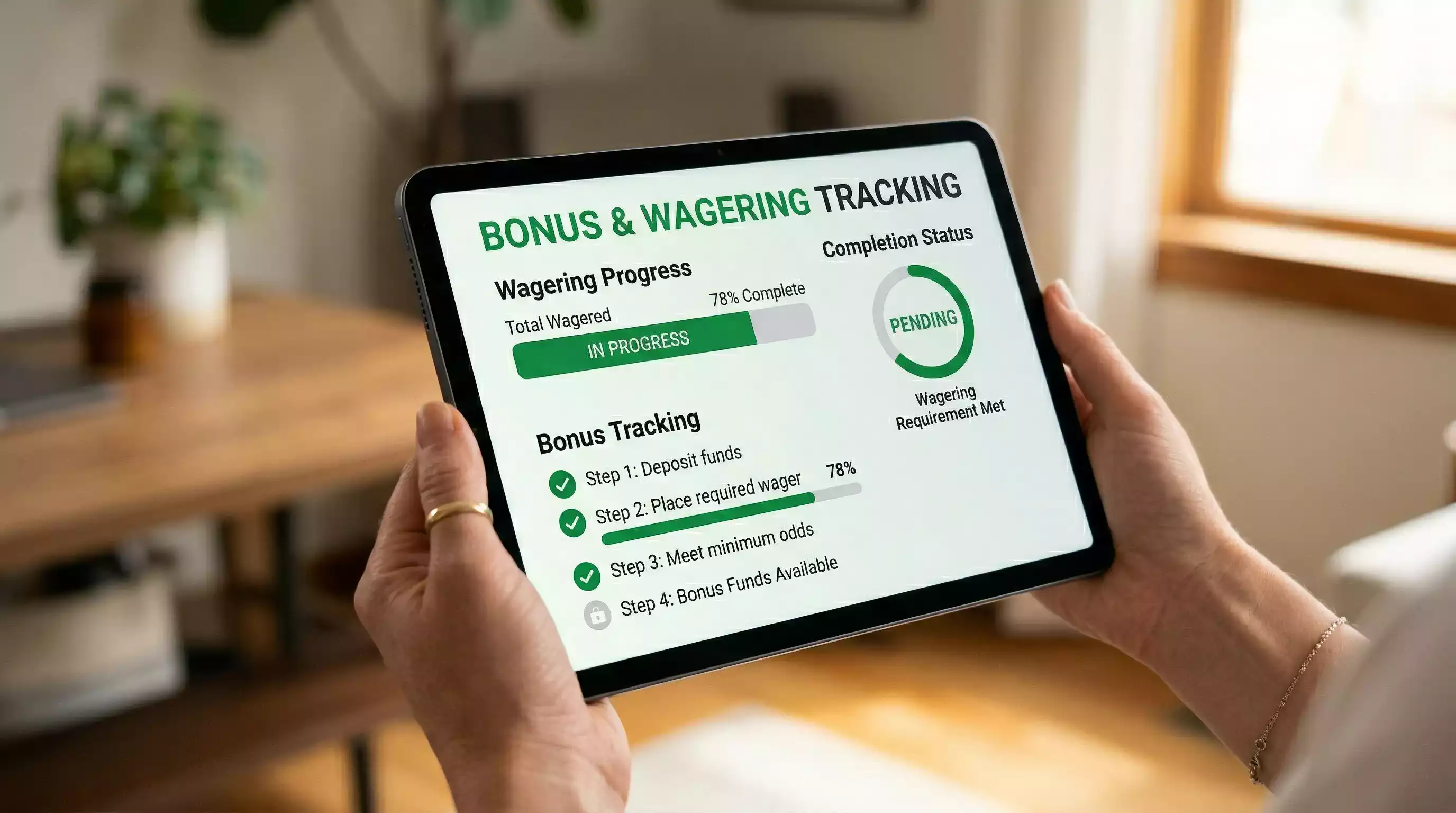
A bonus isn't free money—it's a marketing tool with strings attached. Casinos offer bonuses to attract new players and encourage existing ones to keep playing. Understanding this commercial reality helps you evaluate offers without getting seduced by headline numbers that rarely reflect genuine value.
Welcome bonuses typically match your first deposit up to a specified limit. A "100% match up to £200" means the casino adds £200 if you deposit £200, but only a proportional amount for smaller deposits. Free spins apply specifically to slots, with winnings almost always converting to bonus funds subject to wagering requirements rather than withdrawable cash.
The distinction between bonus types matters enormously. Cashable bonuses eventually become real money once requirements are met. Non-cashable or sticky bonuses disappear when you request withdrawal, leaving only your original deposit and winnings from play. The same headline offer represents radically different propositions depending on this structure.
Do
- Read the full terms before claiming any offer
- Calculate total wagering required before deciding
- Check game contributions for games you actually play
- Set deposit limits before bonus hunting
Avoid
- Depositing more than planned to maximise a match
- Claiming bonuses that restrict your preferred games
- Ignoring time limits that force rushed play
- Chasing bonus completion when behind
From January 2026, wagering requirements at UKGC-licensed sites will be capped at ten times the bonus amount—a dramatic improvement from pre-regulation norms where forty or fifty times wagering was common. Cross-product promotions are now prohibited, simplifying terms considerably. Despite these improvements, bonuses remain marketing tools designed to extend play. The house edge continues operating during wagering, and most players statistically deposit more than the value of their bonus before requirements complete.
Wagering Requirements Decoded
The maths matters more than the headline number. A "20x wagering" requirement on a £100 bonus means betting £2,000 total before withdrawal. The critical variable is what the multiplier applies to—bonus-only or deposit-plus-bonus, which can double the required play.
Calculating Real Wagering: A £100 Bonus at 10x
Bonus amount: £100
Wagering requirement: 10x bonus only
Total wagering needed: £100 × 10 = £1,000
If playing slots at 100% contribution: bet £1,000 on slots
If playing roulette at 20% contribution: bet £5,000 on roulette
Expected loss during wagering (96% RTP slots): approximately £40
Game contributions complicate matters. Slots typically count 100% toward wagering; table games often only 10-20%. Time limits—usually 7 to 30 days—force a pace of play that might exceed your comfortable bankroll management.
Deposits and Withdrawals: Getting Money In and Out
Payment methods differ in speed, limits, and bonus eligibility. Choosing how to move money in and out of gambling sites deserves more consideration than most players give it. The method you select affects how quickly you can start playing, how fast you receive winnings, and sometimes whether you qualify for promotional offers.
Debit cards remain the default—Visa and Mastercard debit work everywhere, deposits arrive instantly, and withdrawals typically process within one to three business days. The familiarity and simplicity appeal to most players. Since the 2020 credit card ban, you cannot fund gambling accounts with borrowed money at UKGC-licensed sites.
Before Your First Deposit
- Set a deposit limit before adding funds—easier to establish limits beforehand than reduce them later
- Verify the site's licence on the Gambling Commission register
- Read bonus terms—some payment methods are excluded from offers
- Prepare KYC documents (ID and proof of address) to avoid withdrawal delays
PayPal has become the premium option for speed—withdrawals often complete within hours rather than days. The separation between your PayPal balance and bank account provides a psychological buffer some players find helpful for bankroll management. Other e-wallets like Skrill and Neteller offer similar functionality, though some casinos exclude e-wallet deposits from bonus eligibility.
Bank transfers via Faster Payments complete within minutes for deposits, though withdrawals take longer as they pass through additional verification. Paysafecard and prepaid options appeal to players wanting strict spending controls through fixed-amount vouchers. Cryptocurrency acceptance remains rare at UK-licensed sites due to the Gambling Commission's stance on volatility and traceability.
Withdrawal Times and KYC Checks
Your first withdrawal will take longer—that's normal. Before any UK gambling site can pay you, they must verify your identity under Know Your Customer regulations. These aren't arbitrary obstacles; they're legal requirements stemming from anti-money laundering legislation. Typical verification requires government-issued photo ID and proof of address dated within the last three months.
Smart players complete verification before they need to withdraw. Most sites allow document submission immediately after registration without waiting until payout time. Getting verified early means that when you do want to cash out, only the payment processing time remains rather than verification delays on top.
Source of funds checks may affect higher-spending players—operators may request evidence of where your gambling money comes from following 2025 regulatory changes requiring closer monitoring of customer spending patterns.
Once verified, e-wallets like PayPal typically pay within 24 hours, often faster. Debit cards take one to three business days due to banking system processing. Bank transfers can extend to five business days. Most sites impose 24-hour pending periods during which you can cancel withdrawals—this cooling-off period exists partly as a responsible gambling measure.
Payment mechanics matter for getting money in and out, but the more fundamental question is how gambling affects your wellbeing. The next section examines the tools designed to keep playing within healthy boundaries.
Responsible Gambling Tools and Support

Every UKGC site must give you control tools—use them before you need them. This isn't about labelling gambling as inherently dangerous or moralising about how people spend their money. It's about recognising that gambling carries real risks and that having controls in place beforehand works better than scrambling for them during a problem.
Deposit limits cap how much you can add to your account—daily, weekly, or monthly. Setting these limits takes seconds during registration or in your account settings. Lowering limits takes effect immediately; raising them requires a cooling-off period, typically 24 hours. This asymmetry is deliberate—it's easy to protect yourself, harder to undo that protection on impulse.
Loss limits cap net losses rather than deposits. Session time limits and reality checks address the temporal dimension of gambling harm—the way hours can disappear unnoticed during play. Operators must provide reality check facilities that allow players to set reminders at intervals of their choosing, displaying session duration and net results. Players must also see elapsed time displayed continuously during online slots sessions. You can continue playing, but these tools help maintain awareness of time spent gambling.
Support Is Available
If gambling is causing problems, help exists:
- National Gambling Helpline: 0808 8020 133 (free, 24/7)
- GamCare: gamcare.org.uk for online chat and counselling
- BeGambleAware: begambleaware.org for information and resources
Self-exclusion closes your account for a minimum period—typically six months to five years. During exclusion, you cannot access your account, receive marketing, or open new accounts at that site. Cooling-off periods offer less permanent timeouts for players who recognise they need a pause but don't require extended restrictions.
Operators increasingly monitor customer behaviour for signs of potential harm. Patterns like chasing losses, erratic deposit behaviour, or significant spending increases can trigger interventions. The 2025 financial vulnerability checks at the one hundred and fifty pound threshold represent systematic monitoring of spending patterns.
GamStop: National Self-Exclusion
One registration blocks you from every UKGC-licensed site. GamStop operates as the UK's national online gambling self-exclusion scheme, mandatory for all operators holding Gambling Commission licences. Register once, and you're excluded from all participating sites simultaneously—no need to contact each operator individually.
The registration process takes about five minutes. You provide personal details including name, date of birth, email addresses, and residential address. These details allow operators to identify and block you when you attempt to register or deposit.
How GamStop Registration Works
Visit gamstop.co.uk and complete the registration form with your personal details. Choose an exclusion period: six months, one year, or five years. The five-year option automatically renews until you actively request removal. Exclusion begins immediately. Within 24 hours, all UKGC-licensed sites should prevent you from playing. You cannot reverse registration before your chosen period ends.
GamStop covers all remote gambling sites licensed by the UK Gambling Commission. It does not cover land-based casinos or betting shops—a separate scheme called SENSE handles those. It does not cover offshore or unlicensed sites operating outside British jurisdiction. Complementary tools like Gamban software and bank gambling blocks create layered protection stronger than any single measure.
How to Choose a UK Gambling Site
Licence first, then everything else. With hundreds of gambling sites competing for British players, choosing where to play can feel overwhelming. UK licensing guarantees baseline protections absent at unlicensed alternatives, but wide variation exists within the licensed market. Your priorities should guide selection beyond the basic verification steps covered earlier.
Game Selection
Does the site offer the games you want? Check game providers for slots, sports coverage for betting, and table limits for casino games.
Payment Options
Does it support your preferred methods? Check processing times and whether your payment qualifies for bonuses.
Bonus Terms
Read the full terms. Compare wagering requirements and time limits. Larger headlines aren't better if terms make completion impractical.
Customer Support
Live chat availability and response times matter more than you think until something goes wrong.
Reputation and track record provide useful signals. Long-established operators with clean regulatory histories generally present lower risk than new entrants or sites with penalty records. Player forums and review sites reveal common complaints, though filter for obvious grievances from losing gamblers versus legitimate service issues.
Mobile experience increasingly matters as smartphone gambling dominates. Some sites offer dedicated apps; others rely on responsive browser design. Both approaches can work well—test the mobile interface before committing significant deposits if that's how you plan to play.
Red flags warrant walking away: sites without visible licence information, those requiring cryptocurrency, platforms with confusing terms, and operators with payment dispute histories. The breadth of legitimate options makes accepting unnecessary risk irrational.
Mobile Gambling: Apps and Browser Play
Most UK gambling now happens on phones. The shift from desktop to mobile fundamentally changed how people interact with gambling sites. Sessions happen during commutes, lunch breaks, and evening television. The availability contributes to both the convenience players appreciate and the concerns regulators harbour about omnipresent gambling access.
Two approaches dominate: dedicated apps and mobile-responsive websites. Both deliver full functionality—deposits, gameplay, withdrawals, and customer support all work on mobile. The choice often comes down to personal preference and storage space tolerance.
Native apps typically load faster and integrate with device features like Touch ID or Face ID for authentication. They can send push notifications about promotions or bet results. Having the app icon on your home screen does make access frictionless, which cuts both ways depending on your relationship with gambling.
Browser-based sites require no download and update automatically without waiting for app store approval. You can play at multiple sites without cluttering your device with apps. Some players prefer the slight friction of typing a URL as a minor barrier between impulse and action.
Functionality differences between the two have largely disappeared. Modern responsive design means the same games and features regardless of access method. Payment methods, deposit limits, and responsible gambling tools work identically on mobile. The practical advice: try both methods and see what suits your usage. What matters is that your mobile gambling happens within limits you've consciously set.
Frequently Asked Questions
How do I verify a casino holds a valid UKGC licence?
Check the casino's website footer for a licence number—it typically appears alongside responsible gambling logos near the bottom of every page. This number usually starts with digits like 38xxx or 39xxx. Visit the Gambling Commission's public register at gamblingcommission.gov.uk and enter the licence number in the search function. The register displays the licence holder's registered name, what gambling activities they're authorised to provide, and the current status of their licence. Green status indicators mean the licence is active; any warnings or conditions appear on the operator's record. If a site claims to be licensed but doesn't appear on the register, or if its licence shows as revoked or suspended, do not play there. The verification process takes about thirty seconds and confirms whether a site operates legally within British jurisdiction.
What responsible gambling tools must UK gambling sites provide?
UKGC licence conditions mandate specific player protection tools that all licensed sites must offer. These include deposit limits settable on daily, weekly, or monthly timeframes, with immediate effect for decreases and cooling-off periods for increases. Loss limits cap net losses over specified periods. Session time limits and reality checks display session duration and running totals—operators must provide these facilities and clearly show elapsed time during play. Cooling-off periods allow temporary breaks of various durations. Self-exclusion options let players close accounts for minimum periods. All licensed sites must participate in GamStop, the national self-exclusion scheme. Operators must display clear links to support organisations including GamCare and BeGambleAware. Since February 2025, sites must also implement financial vulnerability checks when net deposits exceed one hundred and fifty pounds in a rolling thirty-day period. These aren't optional features or premium add-ons—they're legal requirements attached to every UKGC licence.
How do the 2025-2026 stake limits and financial checks affect players?
The 2025 regulatory changes introduced online slot stake caps of five pounds per spin for players aged 25 and over, and two pounds per spin for those aged 18 to 24. These limits apply across all UKGC-licensed sites and represent a significant reduction from previous practice where some games allowed stakes of hundreds of pounds per spin. Financial vulnerability checks now trigger when net deposits exceed one hundred and fifty pounds within any rolling thirty-day period. These checks are designed to be frictionless—they use credit reference data without affecting your credit score and happen without requiring additional documents from you. Only if concerns emerge do operators request further information. Autoplay functionality on slots has been completely banned, requiring manual button presses for each spin. Minimum spin speeds of 2.5 seconds have been enforced. The Remote Gaming Duty increase to forty percent (from April 2026) affects operator profitability but doesn't directly change player experience. For most casual players, these changes have minimal practical impact—the stake limits and deposit thresholds sit above typical recreational levels. For players who previously used high stakes or engaged in extended sessions, the changes enforce more measured play.
Playing Smart in a Regulated Market
The UK's gambling framework exists to let you play—safely. That balance shapes everything in this guide: licensing requirements establishing baseline protections, game mechanics determining what you're playing against, bonus structures requiring careful evaluation, and responsible gambling tools that exist whether or not you currently need them.
None of this makes gambling risk-free. The house edge operates on every casino game. Bookmakers build margins into every market. Over time, the mathematics favour the operators. What regulation provides isn't guaranteed wins—it's confidence that games are fair, funds are protected, and help exists if gambling becomes problematic.
The framework continues evolving. The 2025-2026 changes represent significant shifts in how online gambling operates, from stake limits to financial checks to marketing consent requirements. Future years will likely bring further adjustments. The system isn't static, and staying informed about regulatory developments matters for anyone engaged with UK gambling.
Personal responsibility remains the final layer of protection. All the regulation in the world cannot stop you from gambling more than you can afford or continuing past the point where gambling stops being enjoyable. The tools exist—deposit limits, self-exclusion, support resources—but using them requires honest self-assessment that no external authority can provide.
If you choose to gamble, do so with eyes open. Treat gambling as entertainment with a cost rather than an income source. The regulated market offers genuine protections unavailable elsewhere. Taking full advantage of those protections while maintaining personal limits is what playing smart actually looks like.