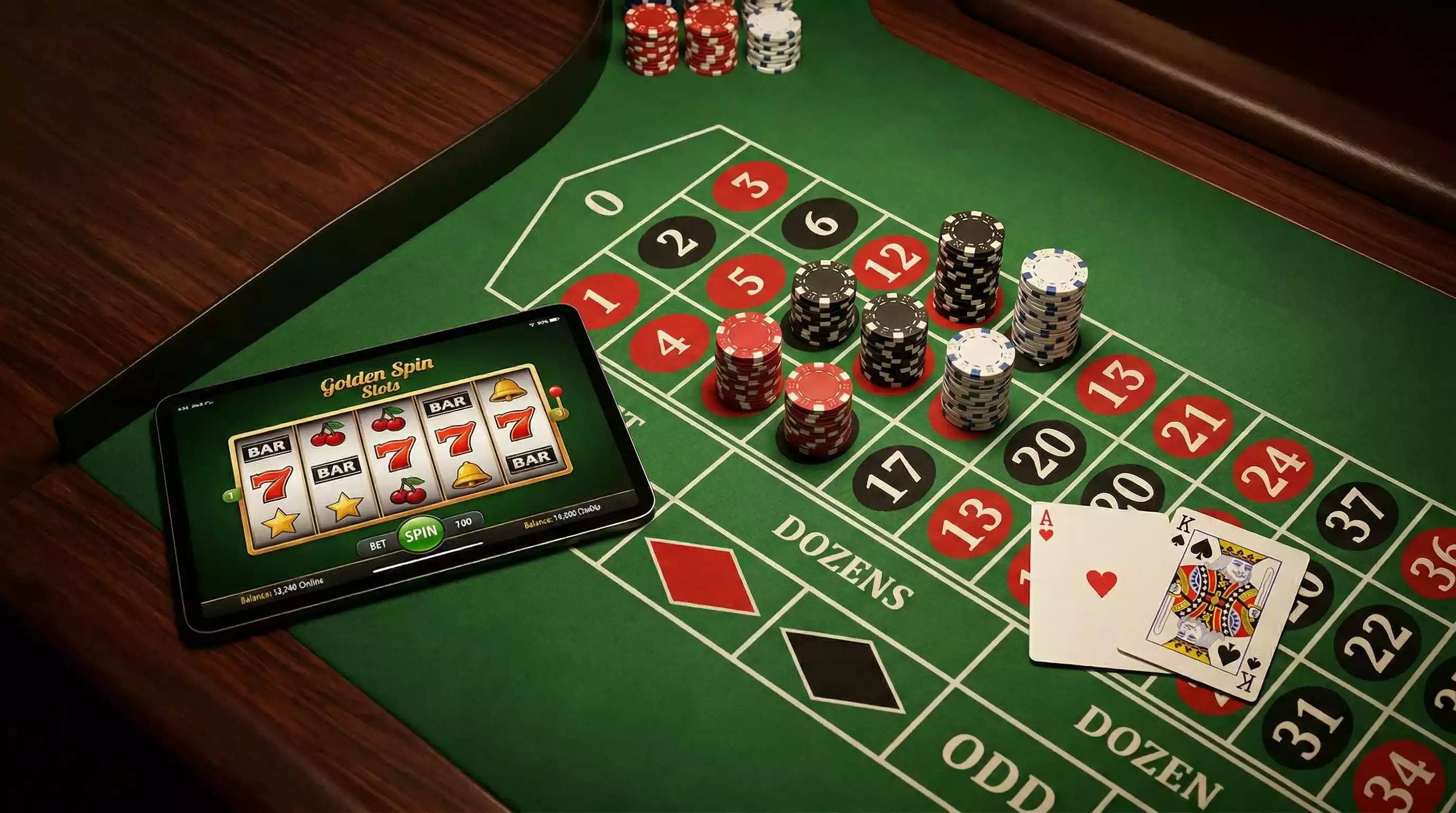
The UK Casino Game Landscape
UK casinos offer thousands of games—but they cluster into a few core categories. Walk into any UKGC-licensed online casino and you’ll find hundreds or even thousands of individual titles, yet beneath that abundance lies a relatively straightforward taxonomy. Understanding how games are categorised helps you navigate the options and find what suits your preferences, whether that’s chasing jackpots, testing your blackjack strategy, or watching a live dealer spin the roulette wheel.
The major categories are online slots, table games (blackjack, roulette, baccarat, and their variants), live dealer games, poker, and a miscellaneous grouping that includes bingo, keno, and instant win scratch cards. Each category operates on different mechanics, offers different house edges, and appeals to different player motivations. Slots are purely chance-based, with random number generators determining every spin outcome. Blackjack allows skilled players to reduce the house edge through optimal play. Live dealer games recreate the social atmosphere of physical casinos. Poker pits players against each other rather than the house.
What follows is a tour through these categories—not a superficial overview, but an explanation of how each works, what distinguishes good options from poor ones, and what the numbers actually mean for your playing experience. The 2025 regulatory changes have affected slots particularly, introducing stake caps and banning autoplay, so that category receives detailed treatment. By the end, you’ll understand not just what games are available but how to think about choosing among them.
Online Slots: The Dominant Category
Slots generate more revenue than everything else combined. This dominance isn’t accidental—slots require no skill, offer the broadest variety of themes and features, and deliver the psychological appeal of occasional big wins punctuating frequent small losses. UK online casinos typically host hundreds of slot titles from dozens of software providers, each competing for player attention through licensed content, innovative mechanics, and increasingly sophisticated audiovisual presentation.
At their core, all online slots function the same way. A random number generator determines the outcome of each spin the moment you click the button—the spinning reels are purely for show, creating anticipation while the result is already decided. The RNG produces outcomes according to the game’s programmed mathematics, ensuring that over millions of spins, the slot will return a specific percentage of wagered money to players as prizes while retaining the rest as the house edge.
Modern video slots have moved far beyond the three-reel fruit machines that inspired the format. Standard layouts now run five reels with multiple paylines, though some games offer “ways to win” systems with thousands of potential combinations. Features like free spins, pick-and-click bonus rounds, expanding wilds, cascading reels, and multipliers add complexity and entertainment value. The Megaways mechanic, pioneered by Big Time Gaming and licensed to many other providers, uses a reel system where the number of symbols per reel varies with each spin, creating up to 117,649 or more ways to win on a single game.
Branded slots deserve mention because they represent a significant portion of the market. Titles based on films, television series, musicians, and other intellectual properties use familiar content to attract players. Whether it’s a game themed around a blockbuster movie franchise or a classic rock band, these slots layer licensed imagery and audio over standard mechanics. The brand doesn’t change the mathematics—a branded slot can have better or worse RTP than a generic alternative—but it does affect player experience and emotional engagement.
The 2025 regulatory changes have reshaped the UK slot landscape significantly. Stake caps mean the maximum bet per spin is now £5 for players 25 and over, £2 for those aged 18-24. This restriction applies universally to online slots at licensed sites. The autoplay ban means every spin must be manually initiated—you can no longer set 50 or 100 spins to run automatically while you step away. Bonus buy features, which allowed players to pay a premium to jump straight into a free spins round, are banned in the UK market. These changes don’t eliminate slots, but they do change how they’re played, particularly for those who previously favoured high-volatility games with large potential payouts funded by high stakes.
RTP and Volatility: What the Numbers Mean
Every slot displays an RTP—but players routinely misunderstand it. RTP stands for Return to Player, expressed as a percentage. A slot with 96% RTP is programmed to return £96 for every £100 wagered over its lifetime. But here’s what that doesn’t mean: it doesn’t mean you’ll get £96 back from your £100 session. RTP is a long-term statistical average calculated over millions of spins. Your individual session can and will deviate wildly from that figure.
Think of it this way: the slot doesn’t know how much you’ve personally wagered. It doesn’t track your balance or try to push you toward 96% returns. Each spin is independent, with outcomes drawn from the same probability distribution. In one session you might lose everything quickly; in another, you might hit a bonus round that pays 500x your stake. Over enormous sample sizes these outcomes average to the programmed RTP, but individual sessions are effectively random.
UKGC-licensed slots typically range from around 94% to 97% RTP, with most falling between 95% and 96%. Higher RTP means a lower house edge—a 97% RTP slot takes 3% rather than 4% or 5%—but the difference may not be noticeable within any reasonable playing timeframe. What matters more for session experience is volatility, which describes how the slot distributes its payouts.
Low volatility slots pay out frequently but in small amounts. Your balance will fluctuate gently, you’ll hit winning combinations often, and extended dry spells are relatively rare. High volatility slots pay out infrequently but in larger amounts. You might spin for a long time without meaningful wins, then hit a bonus round that delivers a substantial payout—or you might simply lose your stake without ever reaching that bonus. Medium volatility sits between these extremes. The RTP could be identical across all three volatility profiles; the difference lies in how you experience the journey. Players with limited budgets often fare better with low volatility slots that extend playing time, while those chasing big wins on larger bankrolls may prefer high volatility games where patience (and funds) can be rewarded with outsized results.
Progressive Jackpots: How They Grow
Progressives offer life-changing sums—with astronomical odds. A progressive jackpot slot links player bets across multiple casinos or across all players at a single site, funnelling a small percentage of each wager into a growing prize pool. That pool increases until someone wins it, at which point it resets to a seed amount and begins climbing again.
The largest progressive jackpots run into millions of pounds. Mega Moolah, perhaps the most famous progressive slot, holds the Guinness World Record for largest online slot jackpot—£13.2 million won by British soldier Jon Heywood in October 2015. These headline figures generate substantial publicity and player interest—who wouldn’t want to become a millionaire from a single spin? The reality behind the dream, however, involves probability. Major progressive jackpots trigger with odds in the tens of millions to one. You’re more likely to be struck by lightning than to hit a network-wide progressive on any given spin.
Progressive slots also typically carry lower base RTPs than non-progressive equivalents because a portion of each bet funds the jackpot rather than returning to players as regular wins. If you’re not hitting the jackpot—and statistically speaking, you’re not—the moment-to-moment experience may feel tighter than a comparable non-progressive game. Playing progressives sensibly means treating them as occasional entertainment purchases rather than rational investment strategies. The jackpot creates excitement and possibility, but expected value calculations favour other games.
Online Blackjack: Strategy Meets Chance
Blackjack is the only casino game where skill meaningfully reduces the house edge. The game’s mathematics reward optimal decision-making—when to hit, stand, double down, split, or surrender depends on your cards and the dealer’s visible card, and getting these decisions right matters. A player using perfect basic strategy against a standard blackjack game can reduce the house edge to around 0.5%, making blackjack one of the fairest games in the casino.
Basic strategy isn’t guesswork or intuition—it’s a mathematically derived set of correct plays for every possible situation. Charts are freely available showing exactly what to do when you’re dealt 16 against a dealer’s 10, or when you have a pair of 8s, or when your soft 17 faces a dealer 6. These optimal plays were calculated by running millions of simulated hands, and they work. Learning basic strategy takes some effort but pays permanent dividends whenever you play blackjack, whether online or in a physical casino.
Online blackjack comes in two main forms: RNG versions and live dealer. RNG blackjack uses random number generation to simulate card dealing, allowing you to play at your own pace without waiting for other players or a dealer. Games deal quickly and can be played in small windows of time. Live dealer blackjack, discussed further below, streams a real dealer and real cards, recreating the social atmosphere of a casino table.
Variants abound and rules matter. European Blackjack, Atlantic City Blackjack, Spanish 21, and numerous proprietary versions each carry slightly different rules about when the dealer hits, when you can double, how splits work, and whether you can surrender. These rule variations affect the house edge. A game allowing surrender and offering 3:2 on blackjack has a lower house edge than one that pays 6:5 on blackjack with no surrender option. Reading the rules before you play—boring as it sounds—lets you choose the most favourable tables available.
Online Roulette: Wheels, Bets and Edges
Roulette’s simplicity is deceptive—different wheels carry different odds. The game offers straightforward betting: predict where a ball will land when the wheel stops spinning. You can bet on specific numbers, ranges of numbers, colours, odd or even, and various other combinations. Payouts correspond to probability: a single number bet pays 35:1 because it’s unlikely; a red/black bet pays 1:1 because it’s close to even.
The critical distinction is between wheel types. European roulette has 37 pockets: numbers 1-36 plus a single green zero. American roulette has 38 pockets: the same numbers plus both a zero and a double zero. That extra pocket dramatically affects your odds. On a European wheel, the house edge is 2.7%. On an American wheel, it’s 5.26%—nearly double. There’s no reason for a savvy player to choose American roulette unless European isn’t available, and it’s almost always available at UK online casinos.
French roulette often offers the best odds of all. It uses the European single-zero wheel but adds two rules: “La Partage” returns half your even-money bet when the ball lands on zero, and “En Prison” allows your even-money bet to remain for another spin when zero hits. Both rules reduce the house edge on even-money bets to just 1.35%. Not all UK casinos offer French roulette, but those that do provide one of the lowest house edges available outside the blackjack table.
Live dealer roulette has become extremely popular, and for good reason: watching a real wheel spin feels more engaging than watching RNG graphics simulate the process. Multiple wheel types are typically available in live format, including Lightning Roulette and other variants that add random multipliers or side bets to the standard game. These variations can be entertaining but generally carry higher house edges than straight European roulette, so approach them as entertainment upgrades rather than strategic improvements.
Baccarat: The Elegant Outsider
Baccarat attracts high rollers with its low house edge and simple decisions. Despite its association with James Bond films and VIP rooms, baccarat is perhaps the simplest table game in the casino. You bet on either the Player hand or the Banker hand, and the deal follows fixed rules that require no decisions from you. Two cards go to each side, sometimes a third is drawn according to predetermined rules, and whichever hand totals closer to nine wins. There’s nothing to it beyond placing your bet.
The house edge on a Banker bet is approximately 1.06%, making it one of the most favourable wagers in the casino. The Player bet carries a 1.24% edge. The Tie bet, paying 8:1 or 9:1, looks attractive but has a crushing house edge above 14%—sensible players ignore it entirely. Baccarat’s elegance lies in this combination: minimal decision-making with an exceptionally fair mathematical proposition on the right bets.
Live baccarat has driven much of the game’s popularity at UK online casinos. Watching cards dealt on a physical table adds atmosphere that the RNG version lacks. Some live tables add squeeze features, where the dealer slowly reveals cards to build tension, or side bets that introduce jackpot elements. Traditional punto banco remains the most common variant, though speed baccarat tables cater to players who want faster action without lengthy reveals.
Live Dealer Games: Real Tables, Real Time
Live casino brings the land-based experience to your screen. Instead of RNG-generated graphics, you watch a video stream of an actual dealer working with real cards, real roulette wheels, and real game equipment. The action unfolds in real time from studios designed specifically for broadcast, with multiple camera angles, professional lighting, and dealers trained to engage with online audiences.
Evolution Gaming dominates the live casino sector, supplying games to most major UK operators. Their studios in Latvia, Malta, Georgia, and elsewhere employ thousands of dealers working around the clock to keep tables running 24/7. Playtech operates competing studios with its own suite of live games. Authentic Gaming focuses on streaming from actual land-based casinos, offering a different aesthetic. The quality of these productions has improved dramatically over the past decade—what once looked like low-budget video chat now rivals professional television broadcasts.
Game shows represent an evolution of the live format. Crazy Time, a wheel-spinning spectacle with multiple bonus rounds, has no traditional casino game equivalent. Dream Catcher, Lightning Roulette, Monopoly Live, Deal or No Deal, and numerous other titles blend gambling mechanics with entertainment show formats. Hosts joke with players, bonus rounds involve elaborate set pieces, and the experience feels like participatory television. These games typically carry higher house edges than traditional table games—you’re paying for the production value—but their entertainment quotient is undeniable.
UK-exclusive tables cater specifically to British players, with dealers who speak with local accents and operate during convenient UK hours. Some tables are branded to specific casinos, available only to that operator’s customers, creating pseudo-exclusive environments. Betting limits vary widely across tables, from low-stakes options suitable for casual players to VIP tables accepting substantial wagers. Live casino requires stable internet connectivity; if your stream lags or disconnects, you may miss betting windows or find hands resolved without your input. A strong broadband or mobile data connection is effectively mandatory.
Online Poker: Player vs Player
Poker pits you against other players—the house takes a cut, not an edge. This fundamental distinction separates poker from every other game in this article. When you play blackjack or slots, you’re betting against the casino, and the casino has a mathematical advantage. When you play poker, you’re betting against other humans, and your success depends on being better than your opponents. The casino profits by taking a percentage of pots (the rake) or charging tournament entry fees, not by holding winning odds against you.
Texas Hold’em remains overwhelmingly dominant. The game’s combination of simple rules and strategic depth has made it the standard format at virtually every online poker room. You receive two private cards, share five community cards with all other players, and attempt to make the best five-card hand while navigating multiple betting rounds that test your reading of opponents and management of risk. Cash games let you sit down with real money and leave whenever you want. Tournaments charge a fixed entry fee and play until one player holds all the chips.
UK player pools have shrunk somewhat since regulatory changes made certain international player pool sharing arrangements more complicated. The largest sites still offer plenty of action, but you may not find the same variety of stakes and game types that would have been available a decade ago. Poker’s social element—the chat, the reads, the bluffs—remains central to the experience, distinguishing it from casino games where you play in effective isolation against mathematics.
Whether online poker suits you depends on your appetite for study and competition. The skills that make a winning player—understanding position, reading betting patterns, calculating pot odds, managing tilt—can be learned but require genuine effort. Casual players can certainly enjoy the game recreationally, accepting that more dedicated opponents will take their money over time. Treating poker as a serious pursuit demands treating it as a skill to be developed, not just a gamble to be taken.
Bingo, Keno and Instant Win Games
Not everyone wants cards or reels. The UK has a distinctive bingo culture that predates online gambling, with dedicated bingo halls serving as social hubs for generations. Online bingo translates this tradition into digital form, complete with chat rooms where players socialise between calls, community jackpots, and the familiar anticipation of waiting for that final number.
Online bingo operates straightforwardly: you purchase tickets, numbers are drawn randomly, and the first to complete a winning pattern takes the prize. Tickets range from a few pence to a few pounds, with prizes varying accordingly. The social element remains central—chat hosts moderate rooms, players celebrate each other’s wins, and regular participants build recognisable identities within their favourite sites. For many players, the community matters as much as the gameplay.
Keno works similarly to lottery draws: you select numbers, a draw occurs, and payouts depend on how many of your numbers appear. The house edge on keno is typically high—often 20% or more—making it one of the least favourable games available. Instant win games, including digital scratch cards, offer immediate results: buy a ticket, reveal the outcome, collect any prize. These games appeal to players who want simple entertainment without the extended sessions that slots or table games can require. The mathematical reality behind scratch cards mirrors that of slots—an RNG determines outcomes according to programmed probabilities, the flashy reveal adds entertainment, and house edges ensure the operator profits over time.
Matching Games to Your Playing Style
The best game is the one you enjoy within your limits. This isn’t a platitude—it’s practical guidance. A player who finds slots tedious won’t suddenly enjoy them because they offer colourful graphics. Someone bored by blackjack’s methodical decisions won’t become a card counter through willpower alone. Your entertainment comes from games that match your temperament, and no amount of RTP optimisation compensates for playing something you don’t actually like.
If you’re chasing the lowest house edges, blackjack with basic strategy and French roulette with La Partage offer the most favourable mathematics outside poker. If you want straightforward entertainment without decision-making, slots deliver variety and occasional excitement in exchange for a moderate house take. If atmosphere and interaction matter to you, live dealer tables provide the closest online approximation to sitting in an actual casino. If competition against other humans appeals, poker offers skill-based play where your edge can be positive if you’re genuinely good.
Whatever you choose, the principles of responsible play apply across categories. Set limits before you start—on deposits, on losses, on time. Treat gambling as entertainment spending, not investment or income. The games are designed to favour the house over time; enjoying them requires accepting that truth rather than fighting it. Played within sensible boundaries, casino games offer genuine entertainment. Played without them, they become something else entirely.