

How Live Betting Transformed the Sportsbook
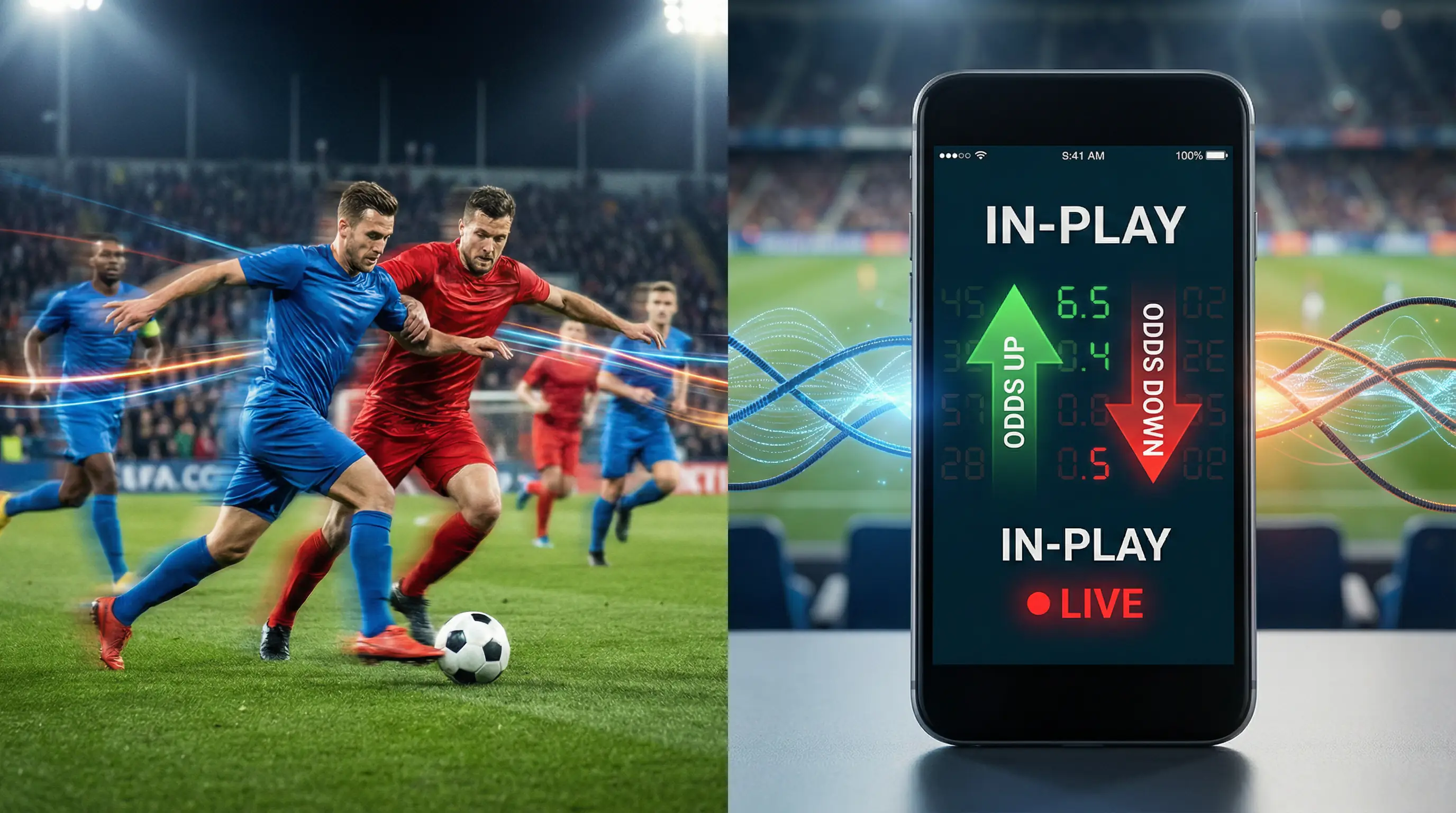
In-play betting barely existed two decades ago. Now it dominates online sportsbook revenue, with live/in-play betting emerging as the leading betting type segment in the sports betting market. UK bookmakers report that live betting accounts for a substantial portion of their sports betting turnover on major events. The shift happened because technology made continuous odds-setting feasible and because mobile phones put betting platforms in pockets rather than just on desktops.
The appeal is straightforward: you can bet on events as they unfold, reacting to what you see rather than predicting in advance. A pre-match bet on a football team winning locks in your position before kickoff. In-play betting lets you watch the opening exchanges, assess which team looks sharper, and act on information that didn’t exist when pre-match markets closed. The additional information comes with rapidly shifting odds — but that’s part of the attraction.
Live betting also fundamentally changed the relationship between watching sport and betting on it. Matches become dynamic betting opportunities rather than passive experiences once your pre-match bet is placed. Every passage of play carries potential significance for available markets. This intensity appeals to some punters and concerns regulators who worry about gambling harms associated with constant betting opportunity. The pace and volume of in-play betting create engagement that pre-match betting cannot replicate.
UK bookmakers have invested heavily in live betting infrastructure — faster odds calculation, better streaming integration, wider market coverage during events. Understanding how these systems work helps punters use them effectively rather than simply reacting impulsively to flashing numbers.
How In-Play Odds Work
In-play odds adjust continuously based on match developments and betting patterns. Goals, red cards, injuries, momentum shifts — anything materially affecting likely outcomes triggers odds recalculation. Modern bookmakers use algorithms combining statistical models with real-time data feeds to adjust prices within seconds of significant events.
The speed creates both opportunity and trap. Odds immediately after goals or other major incidents often overreact, creating brief windows of value before settling to more accurate levels. But chasing these moments requires genuine speed advantages that most recreational punters lack. Bookmakers delay bet acceptance during volatile periods; by the time your bet processes, the opportunity may have passed.
Suspension periods punctuate live betting. Markets close entirely during goals, penalties, red cards, and other crucial moments. You cannot bet on a match during the seconds when a penalty is being taken. These suspensions protect bookmakers from bets placed on outcomes that have effectively already occurred due to broadcast delay — you might see the ball hit the net two seconds before the bookmaker’s feed confirms it.
Market depth during events varies dramatically. Main markets — match winner, next goal, total goals — remain available throughout with tight spreads. Niche markets may suspend entirely or operate with wider margins that reduce value. The busiest events (Premier League, major international football) receive the deepest live coverage; obscure fixtures might offer only basic markets after kickoff.
Latency matters. Watching a delayed stream while betting against traders with real-time feeds puts you at inherent disadvantage. The broadcast delay — typically 10-30 seconds behind actual play — means traders know outcomes before you do. This information asymmetry is structural; no amount of betting skill overcomes it on immediate-outcome markets.
Cash Out: Taking Control Mid-Event
Cash out revolutionised in-play betting by letting punters settle bets before events conclude. If your pre-match bet on Arsenal winning sits at 2-0 with thirty minutes remaining, cashing out locks in guaranteed profit rather than risking a collapse. If your bet looks doomed with the opposition leading, cashing out salvages partial stake rather than accepting total loss. The feature gives you something pre-match betting never offered: an exit before the final result.
Cash out values reflect current odds and time remaining. A £10 bet at 3.00 on an outcome now priced at 1.50 might offer £15 cash out — you’re capturing implied value in your favour without waiting for confirmation. Conversely, an outcome that’s drifted from 2.00 to 4.00 would offer cash out below your original stake, reflecting decreased probability of success.
Bookmakers profit from cash out through the margin built into offered values. Cash out prices are typically less favourable than placing equivalent new bets at current odds. The convenience premium is real; you pay for certainty. Whether that premium represents acceptable cost depends on individual circumstances and risk preferences.
Partial cash out — settling portion of a bet while leaving the remainder active — provides additional flexibility. You might cash out half a winning position to guarantee some return while letting the balance run for full potential value. This hybrid approach suits punters who want reduced risk exposure without entirely abandoning winning positions.
The psychology of cash out deserves consideration. Constant cash out availability creates temptation to second-guess every position continuously. Some punters find this mentally exhausting; others find it engaging. Knowing your own response to continuous optionality helps determine how actively to use the feature versus treating bets as more final commitments.
Sports That Suit In-Play Betting
Football dominates UK in-play betting by volume, but some sports suit live betting mechanics better than others. Sports with frequent scoring, clear momentum shifts, and natural breaks for bet placement create different in-play experiences than continuous-action sports where outcomes resolve in seconds.
Tennis excels as an in-play betting sport. Matches pause between points, allowing bet processing. Individual games and sets create natural betting increments. Momentum visibly shifts; a player’s body language and movement patterns telegraph form changes that attentive observers can potentially identify before odds fully adjust. The direct head-to-head format simplifies analysis compared to team sports with multiple interacting variables.
Cricket — particularly limited-overs formats — provides extended in-play opportunities with measurable metrics throughout. Run rates, wickets in hand, required rates for chasing teams all generate continuous betting angles. The measured pace allows considered betting rather than snap reactions, though drink breaks and innings intervals create natural decision points.
Football’s combination of relatively infrequent goals and continuous action creates distinctive in-play dynamics. Long periods pass with minimal scoreboard change but significant momentum shifts observable to those watching closely. Next-goal and total-goal markets respond to attacking pressure that may or may not produce actual goals. The game rewards pattern recognition about which teams control matches beyond simple scorelines.
Horse racing offers minimal in-play opportunity — races end too quickly. Boxing and MMA provide round-by-round betting opportunities but limited time for considered placement. Golf allows tournament-long in-play betting but lacks the moment-to-moment volatility of faster sports. Matching betting approach to sport characteristics helps determine where in-play activity might add value versus where it simply increases churn and exposure.
Approaches to Live Betting
Disciplined in-play betting requires precommitment to specific scenarios. Rather than betting reactively throughout events, identify specific situations worth acting on before play starts. If a heavy favourite falls behind early, their price will lengthen significantly — is that a buying opportunity you’ve predetermined interest in? Knowing your triggers in advance prevents impulsive betting on every odds movement.
Watching without betting remains legitimate. Not every match requires active positions. Sometimes the entertainment value comes purely from observation; forcing bets where no edge exists converts entertainment into unnecessary loss. In-play betting availability doesn’t create obligation to use it.
Bankroll management intensifies in-play because betting volume can escalate rapidly. A ninety-minute football match offers thousands of betting opportunities across various markets. Without constraints, wagering can quickly exceed sensible limits through accumulated small bets rather than single large wagers. Setting session limits specifically for in-play betting helps contain exposure that might otherwise spiral.
Information lag acceptance matters. Unless you’re at the venue watching live, your information arrives delayed. Fighting this reality by attempting to beat odds movements based on broadcast viewing rarely succeeds against traders with faster feeds. Focusing on longer-term in-play positions — match outcomes rather than next-minute events — reduces information disadvantage impact. The more immediate the market, the greater the latency penalty you face.
Betting in Motion
In-play betting transformed sports gambling from an activity that happened before events into something woven throughout them. The integration has benefits: more engagement, more flexibility, more opportunity to act on observed information rather than pre-match predictions alone. It also has risks: faster loss accumulation, constant decision fatigue, temptation to chase results in real-time rather than accepting outcomes and moving on.
The technology continues advancing. Faster odds calculation, more granular markets, better streaming integration — bookmakers invest heavily because in-play betting generates disproportionate revenue. These investments improve user experience while creating ever more opportunities to bet, which benefits informed punters and endangers undisciplined ones in roughly equal measure.
Using in-play betting effectively means treating it as a distinct discipline rather than simply pre-match betting that continues after kickoff. The information environment differs, the pace differs, the psychological pressures differ. Approaches that work well for considered pre-match betting may not translate directly to live markets where speed and constant optionality change the decision landscape. Developing specific strategies for in-play contexts — when to engage, when to abstain, how to manage the continuous temptation of available markets — represents the more mature approach to a betting format that rewards thoughtfulness over reflexive action.
Explore all betting guides at onlinegamblinguk. Also read our football betting UK.