

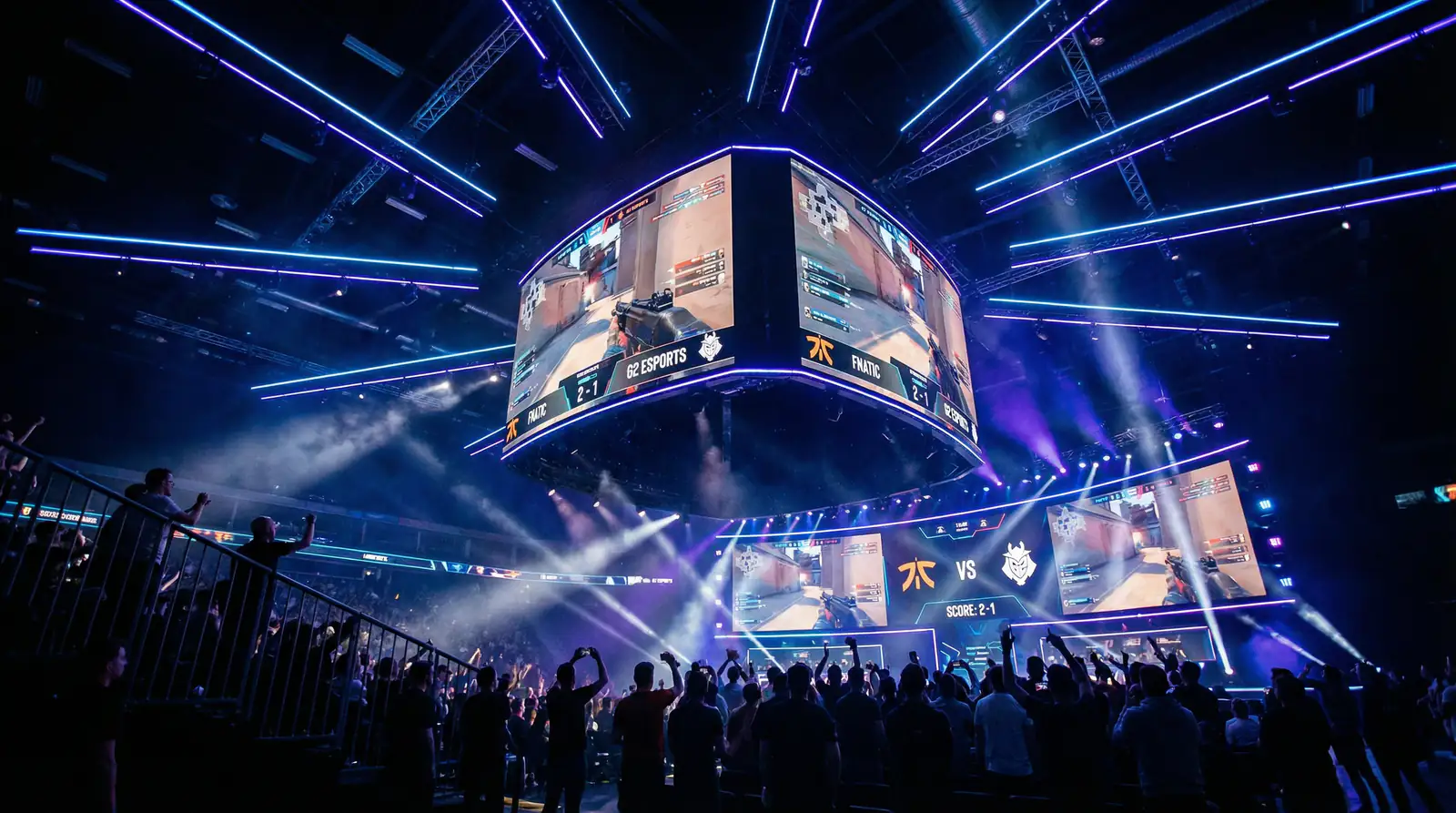
Where Competitive Gaming Meets the Bookmaker
Ten years ago, betting on video games would have drawn blank stares from most UK bookmakers. Now, eSports betting generates hundreds of millions in annual turnover globally, with the UK market alone generating approximately $172 million in revenue, and British punters accounting for a significant slice of that action. The shift happened faster than anyone in the traditional betting industry anticipated.
Competitive gaming — professional players and teams competing in structured tournaments for prize pools that regularly exceed seven figures — has created a betting market that sits somewhere between traditional sports and something entirely new. The games are different. The seasons work differently. The statistics matter in ways that don’t translate directly from football or horse racing. But the fundamental appeal remains identical: you’re backing your judgement on an outcome against the bookmaker’s odds.
UK bookmakers have responded with varying levels of enthusiasm and competence. Some treat eSports as a serious vertical with dedicated traders and comprehensive coverage. Others bolt a handful of markets onto their existing sportsbook and hope for the best. The difference shows in the odds quality, market depth, and the sheer range of events covered. For punters who understand competitive gaming, this creates opportunities — but also traps for those who approach eSports betting without understanding what makes it distinct from conventional sports markets.
The Games That Drive the Market
Not all eSports titles attract equal betting attention. The market concentrates heavily around a handful of games with established professional scenes, regular tournaments, and — crucially — enough historical data for bookmakers to price confidently. Counter-Strike 2, League of Legends, Dota 2, and Valorant dominate most UK bookmakers’ eSports offerings. Each operates on different competitive rhythms and rewards different types of analysis.
Counter-Strike 2 — the renamed and upgraded version of CS:GO — remains the backbone of eSports betting, accounting for approximately 55-64% of all esports betting handle. Matches feature two teams of five competing in round-based tactical shooter gameplay. The game’s structure creates natural betting opportunities: match winner, map winner, handicaps based on round differences, and totals markets on combined rounds. CS2’s long competitive history means extensive data exists for team performance analysis. Major tournaments like the BLAST Premier series and IEM events draw the deepest liquidity.
League of Legends approaches competition differently. Riot Games maintains tight control over regional leagues feeding into international tournaments like Worlds and MSI. The LEC (Europe’s premier league) runs on a seasonal schedule with regular fixtures — closer to traditional sports than the tournament-heavy calendar of Counter-Strike. Market depth typically covers match winner, first blood, first tower, total kills, and various handicap options. Game patches alter character strength and meta strategies, making recent form particularly important.
Dota 2 operates with larger prize pools but less predictable scheduling outside The International and Major tournaments. Valorant has grown rapidly since its 2020 launch, with Riot applying similar franchise-style regional leagues. Both offer substantial betting markets at major UK bookmakers, though coverage depth varies more than for the established titles. Newer games like EA Sports FC esports and various fighting game circuits receive sporadic attention, primarily around major championships.
Understanding eSports Betting Markets
eSports betting markets mirror traditional sports in structure but diverge in application. Match winner markets function identically — you’re picking which team takes the series. But the underlying factors differ substantially from physical sports, and understanding these differences separates informed betting from guesswork.
Handicap markets in eSports typically apply to maps rather than points. A team priced at -1.5 maps needs to win by at least two maps (a 2-0 scoreline in a best-of-three). These markets help level mismatched contests where the favourite’s odds offer little value. Round handicaps in Counter-Strike work similarly but at a more granular level — a team at -4.5 rounds needs to win by five or more rounds across the map.
Totals markets cover various in-game statistics depending on the title. Counter-Strike offers total rounds (typically set around 26.5 for a map), while League of Legends and Dota 2 feature totals on kills, dragons, towers, and other game objectives. These markets require understanding not just team quality but playing style — aggressive teams push kill totals higher even in losses.
First blood, first tower, and similar proposition markets introduce additional variance but reward specific knowledge about team tendencies. Some League of Legends teams prioritise early aggression; others farm safely and scale for late-game fights. This strategic diversity creates exploitable patterns for those who track it.
The critical difference from traditional sports lies in patch cycles. Game developers regularly update their titles, altering character balance, map pools, and fundamental mechanics. A dominant team on one patch might struggle after changes favour different strategies. This dynamic means historical form requires context that casual bettors often miss. Professional eSports bettors track patch notes as carefully as they track match results.
Our top casino picks for the UK
- ZombillionBonus: Welcome Pack 250% up to £4000 + 200 FS · Payout speed: 1-3 business days
- x3betBonus: Welcome Pack 100% Up to £1.000 + 200 Free Spins · Payout speed: 1-3 business days
- SlotoSportBonus: 500% up to £ 10 200+ 777 FS · Payout speed: 1-3 business days
- WinBeastBonus: €5000 + 500 FS + €650 Freebet · Payout speed: 1-3 business days
- NightLuckBonus: Welcome Pack + 805% Up To 6400€ + 280 FS · Payout speed: 1-3 business days
- ChanzeBonus: Slots Welcome Bonus #1 200% up to €500 · Payout speed: 1-3 business days
Live Betting and Match Streaming
In-play betting has transformed eSports gambling in ways that don’t quite parallel traditional sports. Most major tournaments stream freely on Twitch or YouTube, giving bettors real-time information without needing separate subscriptions. The games themselves generate constant data — gold differentials, objective control, kill feeds — creating numerous opportunities for live market adjustments.
UK bookmakers vary dramatically in their live eSports offerings. Some provide dynamic odds that shift with game state, comparable to established football in-play markets. Others offer static live markets that barely respond to in-game developments, effectively just delayed pre-match pricing. The difference matters considerably for anyone serious about in-play betting.
Stream delay introduces unique complications. Broadcast feeds typically run 30 seconds to two minutes behind actual gameplay to prevent competitive integrity issues. Bookmakers account for this with their own delays on bet acceptance, but mismatches occur. Some operators lock markets more aggressively during crucial moments; others accept bets on outcomes that have already occurred (for them, if not for viewers). The ethics here shade grey, but the practical reality is that different bookmakers handle stream synchronisation differently.
Embedded streams within betting platforms have become increasingly common. Bet365, Unibet, and others integrate Twitch streams directly into their eSports sections, letting punters watch and bet in one interface. The convenience is genuine, though independent streaming often provides better commentary and analysis for those willing to use multiple screens.
The combination of free streaming and rapid odds movement makes eSports potentially more accessible for in-play betting than many traditional sports. But it also means the market reacts quickly to visible developments. Finding value requires either speed or insight that the majority of bettors lack — the same dynamic that governs any in-play market, just compressed into shorter timeframes.
Finding eSports Odds at UK Bookmakers
Major UK bookmakers have expanded their eSports coverage significantly, though the depth varies. Bet365 typically offers the broadest range of markets across major titles, with competitive odds on popular matches. Betway has invested heavily in eSports sponsorships and reflects this with dedicated coverage, particularly for Counter-Strike and League of Legends. William Hill, Paddy Power, and Betfair cover major tournaments reliably but with thinner market depth on smaller events.
Odds comparison matters more in eSports than many traditional sports. The market is younger, pricing models less refined, and the gap between best and worst available odds often exceeds what you’d find in Premier League football. Checking multiple bookmakers before placing significant bets pays dividends disproportionate to the effort required.
Coverage gaps exist even at major operators. Tier-two tournaments and regional qualifiers frequently receive minimal attention or none at all. Dedicated eSports betting sites — operating under UKGC licences but focused primarily on gaming markets — sometimes offer better depth for serious eSports punters. However, their bonuses and general betting features typically lag behind major sportsbooks.
Verification requirements apply identically to eSports betting as other forms of gambling. UKGC-licensed operators must confirm your identity and age before allowing withdrawals. The process doesn’t differ based on what you’re betting on. Under the Gambling Act 2005, eSports betting is regulated identically to traditional sports betting by the UK Gambling Commission. Responsible gambling tools — deposit limits, self-exclusion, reality checks — function the same way whether you’re betting on CS2 or Champions League football.
The New Frontier
eSports betting occupies an interesting position in the UK gambling landscape — established enough that major bookmakers take it seriously, yet still nascent enough that inefficiencies persist. The audience skews younger than traditional sports betting, which creates regulatory attention around youth marketing even as the betting demographic itself ages into adulthood.
For punters with genuine competitive gaming knowledge, opportunities exist that don’t translate directly from traditional sports betting expertise. Understanding team compositions, meta shifts, player roles, and tournament structures provides analytical edges that the general betting public lacks. But the same principles apply: edges erode over time as markets mature, and the house maintains its margin regardless of the sport.
The games themselves will change. Titles rise and fall in popularity; new competitive scenes emerge while established ones contract. The specific games dominating today’s eSports betting might not lead the market five years from now. What persists is the underlying dynamic — skilled competition with structured outcomes that bookmakers can price and punters can bet on. That dynamic shows no sign of weakening. If anything, competitive gaming’s integration into mainstream entertainment suggests eSports betting will grow to match or exceed many traditional sports in betting volume within the coming decade.
Find more betting content at onlinegamblinguk. Also read our UK sports betting.