

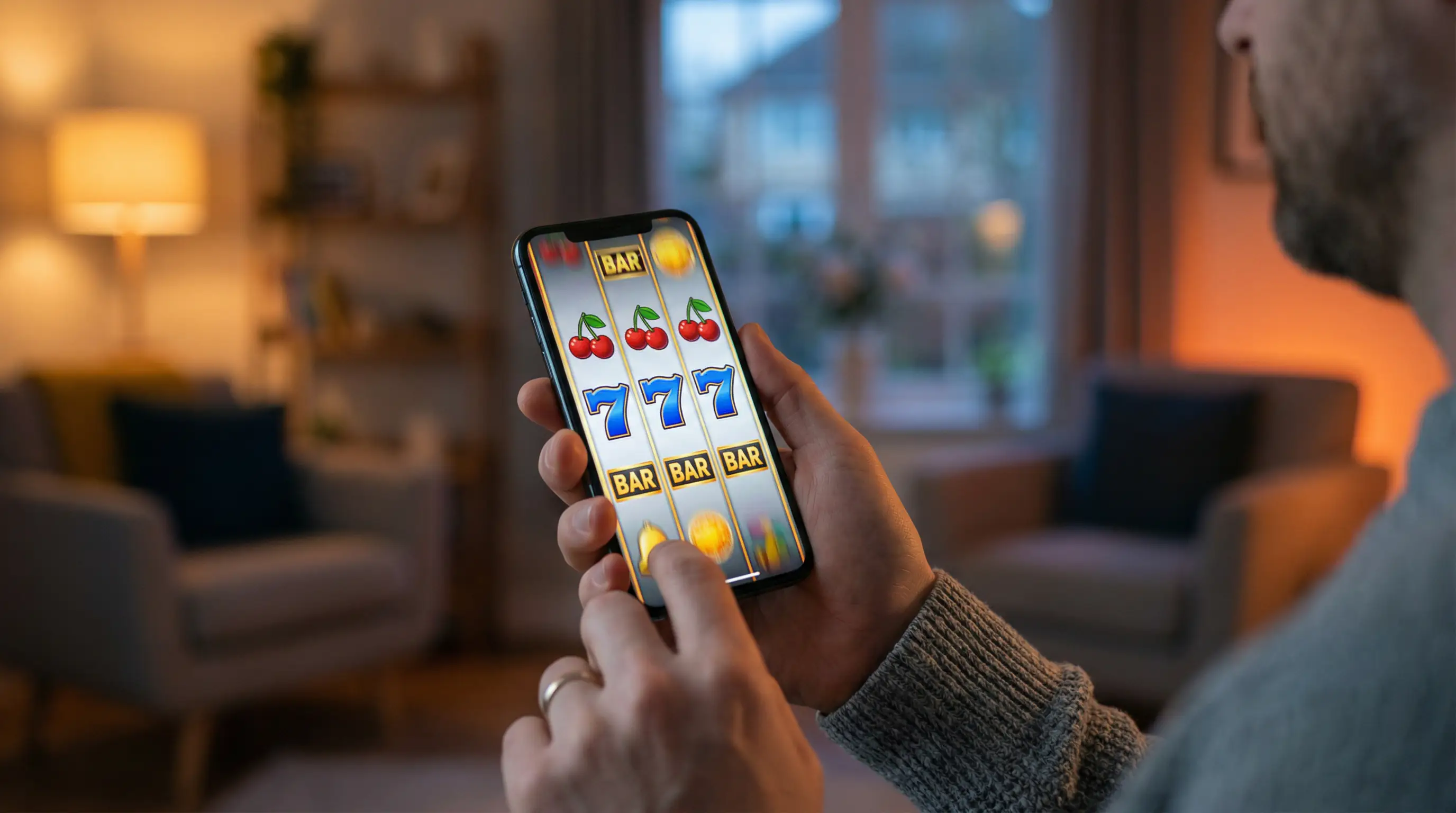
How Online Slots Actually Work
Online slots dominate the UK gambling market. They generate more revenue than table games, live casino, and poker combined. They’re also the most misunderstood product in any casino, wrapped in mythology about hot machines, due payouts, and winning strategies.
The reality is simpler and less romantic. Every online slot uses a random number generator—software that produces unpredictable outcomes thousands of times per second. When you press spin, the RNG’s current output determines your result. The symbols you see landing on the reels are a visual representation of a decision that’s already been made.
This means every spin is independent. The slot doesn’t know or care whether you’ve just won a jackpot or suffered fifty consecutive losses. It has no memory of previous outcomes and no intention regarding future ones. Patterns players perceive are exactly that—perceptions, not reality.
UK regulations require that slots display their theoretical return to player (RTP) and that the games operate as advertised. The Gambling Commission licenses the software providers and audits the games. A slot claiming 96% RTP must actually return 96% over its lifetime—not to each player individually, but across all play on that game.
Understanding this foundation matters because it shapes everything else about slot play: why strategies don’t work, why RTP is a long-term metric, and why the house always maintains its edge regardless of what you do.
Slot Types and Game Mechanics
Walk into the slots section of any UK online casino and you’ll find thousands of titles. They cluster into categories defined by their mechanics, themes, and payout structures.
Classic slots mimic the original fruit machines: three reels, limited paylines, simple symbols. They appeal to players who want straightforward gameplay without elaborate bonus features. What you see is what you get—spin, match symbols, collect winnings or don’t.
Video slots are where most of the action happens. Five reels, multiple paylines (often 20 to 50, sometimes hundreds), and bonus features ranging from free spins to interactive mini-games. Modern video slots incorporate wild symbols that substitute for others, scatter symbols that trigger bonuses regardless of position, and multipliers that boost winning combinations. The complexity varies enormously between titles.
Megaways slots deserve separate mention. Developed by Big Time Gaming and licensed to other providers, the Megaways mechanic changes the number of symbols appearing on each reel every spin. This creates variable paylines—sometimes over 100,000 ways to win on a single spin. The volatility tends toward the extreme; Megaways slots can produce massive wins or extended dry spells.
Progressive jackpot slots link multiple games together, with a portion of each bet feeding a shared prize pool. Jackpots can reach millions of pounds before someone triggers them. The odds of winning are astronomical—far worse than the underlying game’s RTP would suggest—but the potential payouts attract players who want to chase life-changing sums.
Bonus buy features allowed players to skip straight to bonus rounds by paying a premium. UK regulators banned this feature in 2019, viewing it as an acceleration mechanism that increased harm risks. The ban remains in force; UK players must trigger bonuses through normal gameplay.
RTP and Volatility Explained
Two numbers tell you more about a slot than any marketing description: RTP and volatility. Understanding what they mean—and what they don’t—is essential for informed play.
RTP stands for return to player, expressed as a percentage. A slot with 96% RTP theoretically returns £96 for every £100 wagered on it. The remaining £4 represents the house edge. UK online slots typically range from 94% to 97% RTP, though some fall outside this band in either direction.
Here’s what RTP doesn’t mean: it doesn’t mean you’ll get 96% of your money back in any given session. RTP is calculated over millions of spins across all players. In a single session, you might lose everything or win substantially more than you wagered. The percentage is a mathematical property of the game, not a prediction of your experience.
Volatility (sometimes called variance) describes how a slot’s returns are distributed. Low volatility slots pay out frequently but in smaller amounts. High volatility slots pay out rarely but in larger chunks. Medium volatility sits between the two. Neither is inherently better—they suit different playing styles and bankroll sizes.
A high-volatility slot might go fifty spins without a meaningful win, then deliver a payout worth hundreds of times your stake. A low-volatility slot might pay small wins every few spins, keeping your balance relatively stable but rarely producing dramatic results. The RTP could be identical in both cases; the playing experience would be completely different.
Game providers typically disclose RTP but are less consistent about volatility information. Some include it in the game rules; others don’t. Independent slot review sites often categorise games by volatility based on player experience and analysis.
Choosing slots based on these metrics won’t guarantee wins—nothing can—but it aligns your play with realistic expectations.
The 2025 Stake Limits and What They Changed
Online slots attracted more regulatory attention than any other gambling product in the 2023 White Paper review. The result was a suite of measures that fundamentally changed how slots operate in the UK market.
Stake limits cap the maximum bet per spin. Players aged 25 and over face a £5 maximum (from 9 April 2025); players aged 18-24 are limited to £2 (from 21 May 2025). Before these limits, some online slots accepted bets of £100 or more per spin—amounts that could produce catastrophic losses in minutes. The age-differentiated approach reflects evidence that younger players are more vulnerable to gambling harm.
Autoplay is gone. Previously, players could set slots to spin automatically for dozens or hundreds of rounds. The feature encouraged disengaged, semi-conscious play—exactly the pattern associated with problematic gambling. Now every spin requires deliberate initiation. The friction is intentional.
Spin speed limits impose minimum intervals between spins. Combined with the autoplay ban, this slows the pace at which money can change hands. A session that might have burned through £500 in an hour now takes longer, creating more opportunities for players to pause and reconsider.
These changes don’t make slots profitable for players—the house edge remains—but they reduce the maximum rate of loss. A player betting the £5 limit can lose less per minute than someone who was previously betting £100. The ceiling matters even if most players never hit it.
Industry response was predictable: warnings about reduced revenue, customer migration to offshore sites, job losses. Some of those concerns proved valid to varying degrees. What’s also true is that UK-licensed slots now operate with restrictions that simply don’t exist in less regulated markets. Whether that’s a selling point or a limitation depends on your perspective.
Playing Slots Sensibly
Slots are entertainment products with negative expected value. Over time, the house wins. Accepting this reality is the starting point for sensible play.
Set a budget before you start—an amount you can afford to lose entirely. When it’s gone, stop. This sounds obvious; in practice, players routinely ignore it. The tools exist to help: deposit limits lock in your maximum before the session begins, removing the temptation to chase losses in the moment.
Time limits matter as much as money limits. Extended sessions produce fatigue that impairs judgment. Setting a timer or using the casino’s session limit feature creates a natural endpoint regardless of whether you’re winning or losing.
Choose slots that match your bankroll and risk tolerance. A high-volatility game with a small budget produces short sessions and frequent busts. If you want longer play, lower volatility extends the entertainment—though it won’t change the mathematical outcome over time.
Ignore anyone selling slot strategies. The RNG doesn’t respond to betting patterns, timing, or intuition. Systems that claim to beat slots are either misguided or fraudulent. The only strategic decision is whether to play at all.
Track your play. UK casinos must provide transaction histories; reviewing yours occasionally provides a reality check that memory alone doesn’t offer. Most people underestimate their losses. Numbers don’t lie.
If slot play stops being entertainment—if you’re chasing losses, hiding play from family, or gambling money you need—that’s a signal to stop and seek support. The responsible gambling tools at every licensed site exist for exactly this situation.
Spinning with Eyes Open
Online slots are designed to be engaging. The graphics, sounds, and near-miss animations exist because they work—they keep players playing. There’s nothing sinister about this; every entertainment product tries to be compelling. But it helps to recognise the design for what it is.
The maths underneath the experience are fixed and public. RTP tells you the theoretical return. Volatility tells you the distribution. The house edge ensures that, collectively, players lose. None of this is hidden; it’s just easy to forget when you’re immersed in the game.
UK regulation has added friction to slot play: lower stakes, no autoplay, slower spins. These measures address real harms that emerged from unrestricted play. They also make the UK market different from offshore alternatives where no such rules apply. Players seeking higher limits can find them elsewhere—along with the risks that come with less regulated environments.
Slots will remain popular because they offer something genuine: accessible entertainment with the possibility of winning money. They also remain a product where most players lose over time. Both things are true simultaneously.
Playing with eyes open means understanding the product, setting limits that make sense for your circumstances, and recognising when play has stopped being fun. The slot doesn’t care about your wellbeing. That responsibility belongs to you—supported by tools and safeguards that regulation now requires, but ultimately a personal choice.
Find the best slots at onlinegamblinguk. Also read about progressive jackpot slots in the UK.