

The Sport Built on Betting
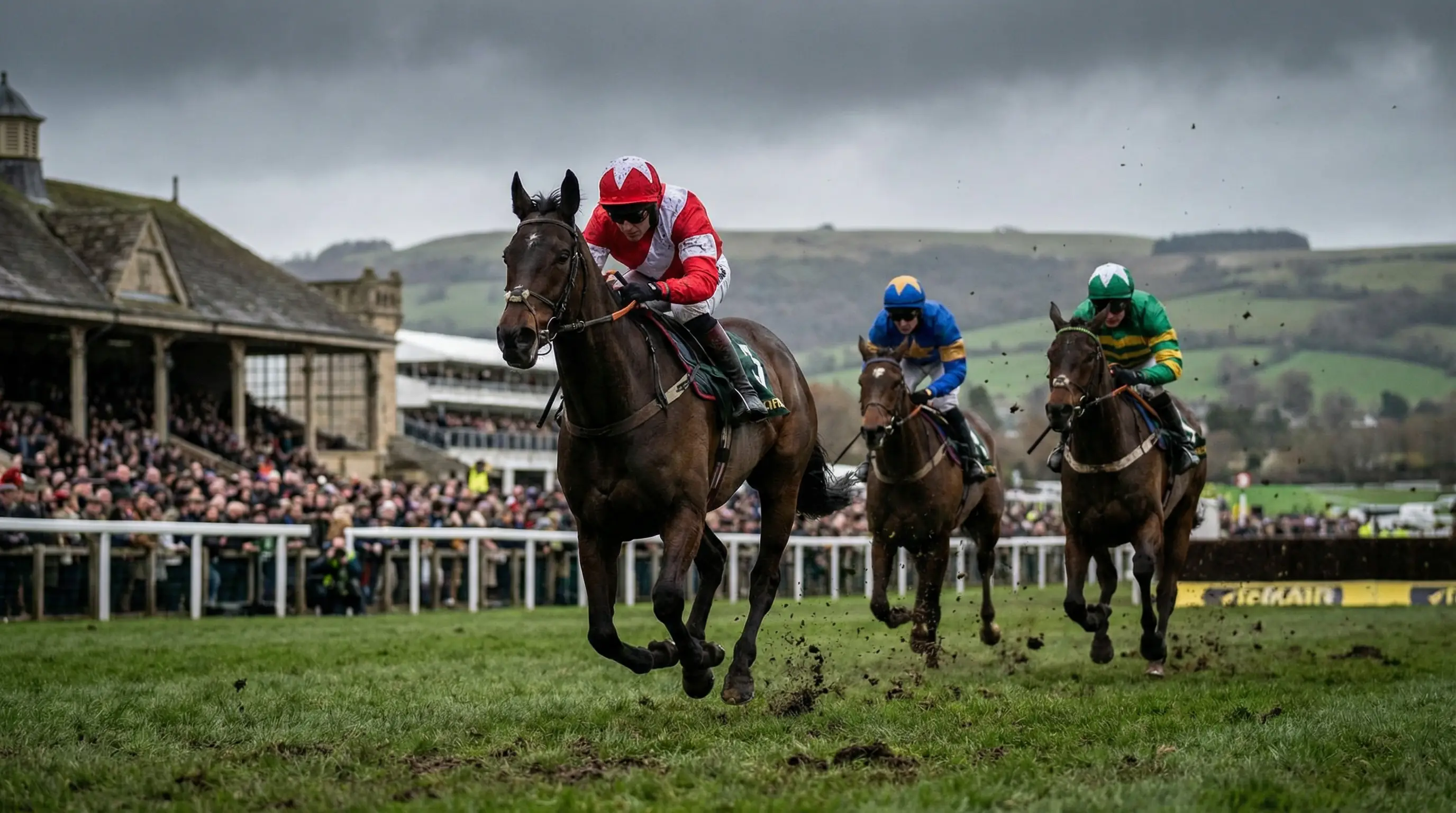
Horse racing and gambling have been inseparable in Britain for centuries. The sport developed around betting; without the flow of money through bookmakers and tote pools, racing as we know it wouldn’t exist. This isn’t an uncomfortable association—it’s the economic foundation that sustains breeding, training, prize money, and the racecourses themselves.
Britain hosts around 1,400 race meetings annually across 59 racecourses. From prestigious flat racing at Ascot and Epsom to the mud and drama of National Hunt at Cheltenham and Aintree, the variety is extraordinary. Each meeting offers dozens of races; each race offers betting markets that attract millions of pounds in wagers.
Racing betting differs from other sports in several ways. The form book provides detailed historical data on every horse, jockey, and trainer. The going—the ground condition—affects outcomes dramatically. Race types impose structure that informs expectations. A serious racing punter absorbs information that casual bettors never consider.
The bookmaking industry originated with horse racing, and the sport remains central to their operations. Traditional bookmakers still stand at courses, shouting odds and taking cash bets. The online equivalents offer the same markets with added convenience and often better prices.
UK regulation covers racing betting as comprehensively as any other form. Licensed bookmakers must offer fair terms, protect customer funds, and provide responsible gambling tools. The integrity of British racing is monitored by the British Horseracing Authority, with suspicious betting patterns triggering investigations. The system isn’t perfect, but the framework for accountability exists.
Understanding Race Types and Conditions
British racing divides into two main codes: Flat and National Hunt. Flat racing takes place on level courses without obstacles, emphasising pure speed. National Hunt—also called jump racing—includes hurdles and steeplechases over fences. The codes have different seasons, different tracks, and attract different horses bred for different purposes.
Within each code, races are graded by quality. Group races (Flat) and Graded races (National Hunt) represent the elite level. Group 1 races are the most prestigious—the Classics, the Champions Day features, the Gold Cup. Below that, Listed races offer a step down in class, then conditions races, then handicaps at various levels.
Handicaps are designed to give every horse a chance. The handicapper assigns weights based on past performance; better horses carry more weight to level the competition. In theory, every horse in a handicap should have an equal chance of winning. In practice, handicapping is an imprecise art, and spotting well-handicapped horses—those carrying less weight than their ability deserves—is a traditional punting approach.
Maiden races are restricted to horses that haven’t won before. These can be particularly informative for form students, as young horses improve dramatically and previous performances may understate current ability.
The going describes ground conditions, from Heavy (waterlogged) through Soft, Good to Soft, Good, Good to Firm, to Firm. Some horses excel on particular ground; others struggle. Checking going preferences in the form book is essential before betting on any race. A horse with a perfect record on Good ground might be completely wrong on Heavy.
Distance matters too. Sprinters race over five or six furlongs; stayers run over two miles or more. A horse proven at one distance isn’t automatically suited to another.
Betting Markets and Each-Way Rules
Win betting is the simplest form: back a horse to finish first. If it wins, you collect; if it doesn’t, you lose. The odds reflect the market’s assessment of each horse’s chances, with the favourite offering the shortest price and outsiders trading at longer odds.
Each-way betting splits your stake into two bets: one on winning, one on placing. If your horse wins, both bets pay out. If it places but doesn’t win, only the place portion pays—typically at 1/4 or 1/5 of the win odds, depending on the number of runners and race type.
Standard each-way terms vary. In races with 8-15 runners, bookmakers usually pay three places at 1/5 odds. Handicaps of 16 or more runners often pay four places at 1/4 odds. Major races like the Grand National may extend to five or six places. Always check the terms before betting each-way.
Best Odds Guaranteed is a common promotion where bookmakers pay the SP (starting price) if it’s higher than the odds you took. You lock in early prices without risking missing market drifts. Most major UK bookmakers offer this on British and Irish racing.
Ante-post betting allows wagers weeks or months before a race, typically offering bigger prices than on the day. The risk is that your horse might not run—withdrawals usually mean lost stakes, though some bookmakers offer non-runner money back on specific events.
Forecast and tricast bets require selecting first and second (forecast) or first, second, and third (tricast) in the correct order. The payouts can be substantial but the difficulty matches. Combination forecasts cover multiple permutations, increasing cost but relaxing the exacta requirement.
Tote betting pools all stakes and distributes payouts after deducting a percentage. Pool odds aren’t known until betting closes. The Tote can offer better or worse value than fixed odds depending on how money flows.
Major Meetings and the Festival Calendar
The racing calendar builds toward landmark events that capture national attention. These meetings combine the highest quality racing with the heaviest betting turnover—and often the most competitive markets.
The Cheltenham Festival in March is the pinnacle of National Hunt racing. Four days, 28 races, the best jumpers from Britain and Ireland competing for championship titles. The Gold Cup, Champion Hurdle, Queen Mother Champion Chase—these are the races that define careers. Betting turnover across the festival exceeds £500 million. The Irish invasion adds an international dimension; many winners cross the Irish Sea.
The Grand National at Aintree is the most famous horse race in the world. The four-mile-plus course with its unique fences makes it the ultimate test of stamina and jumping ability. Half the country seems to have a bet on the National, including millions who wager on no other race all year. The unpredictability—up to 34 runners, 30 fences, countless ways for races to unravel—makes it a punting lottery that form alone cannot solve.
Royal Ascot represents flat racing at its most prestigious. Five days in June, attended by royalty, driven by fashion as much as sport. The meeting features Group 1 races alongside tradition and pageantry. The global quality of runners, with horses shipping in from Ireland, France, America, and beyond, makes form interpretation particularly complex.
The Epsom Derby and Oaks are the supreme tests of the Classic generation—three-year-olds running over a mile and a half on the challenging camber of Epsom Downs. The Derby especially stands as the race every owner dreams of winning.
Beyond the headline events, thousands of meetings fill the calendar. Weekday afternoons at provincial tracks offer competitive handicaps with less public attention—and sometimes less efficient markets. The serious racing punter doesn’t just bet on the big days.
Approaching the Form
Form study is the traditional route to finding betting value in horse racing. The historical record exists; the question is whether you can interpret it better than the market already has.
The Racing Post and other form guides provide detailed information: previous runs, finishing positions, distances beaten, conditions, jockeys, trainers, and official ratings. Learning to read this data quickly comes with practice. At first, it looks like impenetrable shorthand; eventually, patterns emerge.
Recent form matters most. A horse that ran well two weeks ago is more likely to repeat than one whose best performance was six months past. But context modifies everything: was that recent run on suitable ground? Against appropriate opposition? At the right distance?
Trainer form reveals current stable health. Some trainers hit purple patches where everything clicks; others endure losing runs where nothing goes right. Track statistics show which trainers excel at specific courses—knowledge that casual punters rarely check.
Jockey bookings can signal intent. A leading jockey picking up a ride on an unfancied horse suggests connections expect improvement. Watch for significant jockey changes, especially when top riders switch to horses they don’t normally ride.
Market movements offer clues about inside knowledge. Unexplained money arriving for an outsider often means someone knows something. This isn’t foolproof—sometimes money is just wrong—but sustained gambles from informed sources tend to be meaningful.
Specialisation helps. Nobody can follow every track, every code, every race type with equal depth. Focusing on specific meetings, trainers, or race categories builds expertise that generalised attention cannot match. The punters who consistently profit from racing usually know their niche exceptionally well.
Racing’s Living History
Horse racing connects the present to centuries of British sporting tradition. The Derby has been run since 1780. The Grand National dates to 1839. Royal Ascot was founded by Queen Anne in 1711. Few sports can claim comparable heritage; fewer still maintain their traditions so visibly.
Betting has been part of that history throughout. The ring at every racecourse traces a lineage back to betting’s earliest days. The language of racing—odds, handicaps, each-way, starting price—became the language of gambling generally. British bookmaking grew up around the track.
The modern industry looks different but serves the same function. Online betting has replaced much of what once happened at the course or in the betting shop. The major bookmakers are now digital-first businesses. But the core transaction—a punter backing a horse against a bookmaker’s odds—remains unchanged.
Racing betting offers something that football and other sports cannot: a centuries-deep form book, a structured handicapping system, and a culture where studying form is expected rather than eccentric. The information asymmetry that favours bookmakers in most markets is narrower in racing because so much data is publicly available.
Whether that translates into punting profit depends entirely on application. The data exists; using it effectively requires knowledge, discipline, and specialisation that most bettors never develop. But the possibility is there—more tangibly than in almost any other betting market.
The sport built on betting continues to evolve, but its foundations remain recognisable. The horses run, the odds fluctuate, the crowd cheers home a winner. The essential experience connects directly to what punters have enjoyed for hundreds of years.
Get more betting tips at onlinegamblinguk. Also check our betting odds explained for UK punters.